
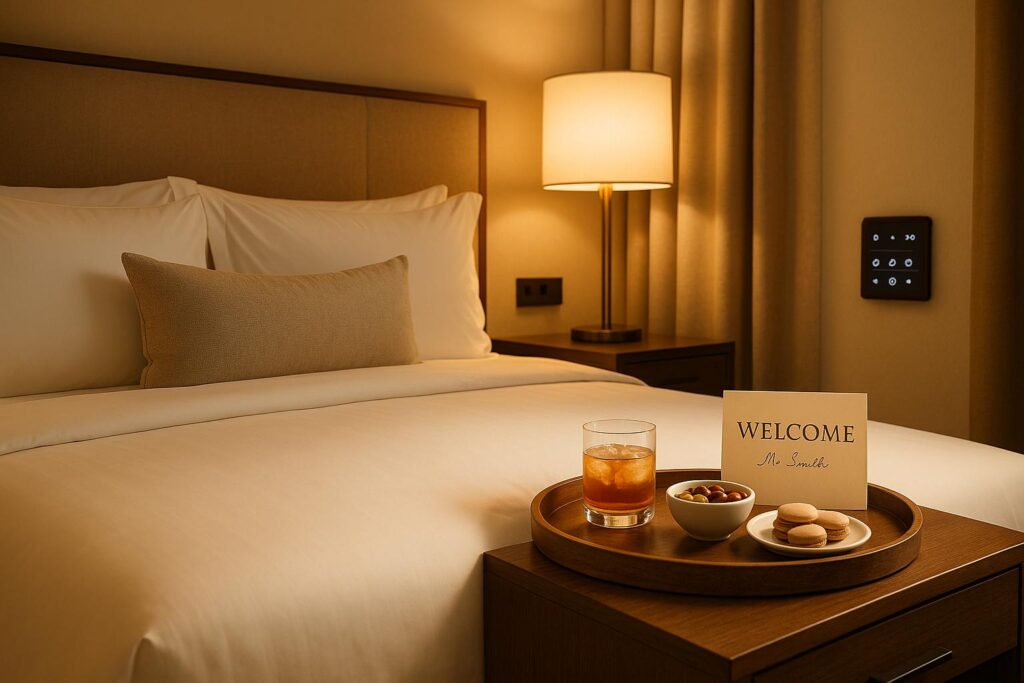
Personalization is transforming how hotels make guests feel at ease. From dining options to flexible check-ins, tailored services address individual needs and create memorable stays. Here’s a quick overview of how personalization enhances comfort:
- Custom Dining Options: Cater to dietary needs with pre-arranged meals, AI-powered menus, and allergen-free choices.
- Flexible Check-In/Check-Out: Adjust to guests’ schedules, reducing travel stress with mobile apps and real-time room updates.
- Adjustable Room Settings: Smart thermostats, dimmable lighting, and pillow menus let guests control their environment.
- Personalized Greetings & Amenities: Thoughtful touches like welcome notes and tailored minibar items build emotional connections.
- Using Guest History: Track preferences to simplify decisions, from room setup to dining suggestions.
Hotels like Aloft Trophy Club Westlake combine these practices with tech and human care to elevate the guest experience. Personalization isn’t just a perk – it’s what makes a stay unforgettable.
Guest Experience 2030: From Hyper-Personalization to Predictive Hospitality.

1. Custom Dining Options Solve Dietary Restrictions and Preferences
Dining can be a real headache for travelers with dietary restrictions. Whether it’s managing a severe nut allergy, sticking to a gluten-free diet due to celiac disease, or adhering to kosher guidelines, the simple act of finding a safe meal can quickly become overwhelming. For some, the lack of suitable options means leaving the property entirely to find food that meets their needs.
Hotels addressing this challenge with personalized dining options make all the difference. Instead of forcing guests to repeatedly explain their restrictions or sift through generic menus, they can proactively prepare to accommodate specific needs. By gathering dietary information during booking or through pre-arrival communication, kitchen staff can stock the right ingredients and plan customized meals ahead of time. This thoughtful preparation not only eases guest anxiety but also sets the stage for innovative tech solutions to enhance the experience even further.
Technology steps in to make personalization scalable. AI-powered systems can track guest preferences through loyalty programs or booking platforms and tailor digital menus accordingly. With these tools, guests can instantly filter options to see only dishes that meet their dietary needs. For example, someone with a dairy allergy could use the hotel’s app to identify safe breakfast items, eliminating the need to worry about cross-contamination. These systems can even remember ongoing preferences – like always wanting black coffee or a specific salad – making future visits even smoother.
Take the W XYZ Lounge at Aloft Trophy Club Westlake, for instance. This modern space combines a relaxed vibe with a commitment to dietary flexibility. Guests can enjoy plant-based dishes, allergen-free meals, or custom beverage options tailored to their requests.
For a more personal touch, chef consultations allow guests to co-create meals that fit their exact needs. This direct interaction not only ensures safety but also builds trust, making the dining experience feel special and stress-free.
Mobile ordering platforms take customization to the next level, especially for room service. Guests can modify ingredients, swap items, or include special instructions directly through an app. Picture a business traveler arriving late after a delayed flight: they can order a meal that avoids allergens, includes extra vegetables, and substitutes gluten-free bread – all with just a few taps. This convenience ensures that their meal is exactly what they need, right when they need it.
Clear, well-labeled menus are another key element. Marking dishes as gluten-free, vegan, nut-free, or dairy-free – along with transparent ingredient lists and cross-contamination warnings – empowers guests to make informed decisions quickly. For U.S. travelers especially, this level of clarity adds a layer of safety and peace of mind.
Whether it’s offering lighter, protein-packed options or kids’ menus designed with food sensitivities in mind, customized dining positions hotels as true partners in their guests’ health journeys. And when every team member, from check-in to dining, is on the same page thanks to an integrated CRM, the guest experience becomes seamless. No more repeating restrictions – just consistent, thoughtful service that keeps guests coming back.
2. Flexible Check-In and Check-Out Times Reduce Travel Stress
Timing plays a big role in making a guest’s stay more comfortable. Standard check-in and check-out times – like the usual 3:00 p.m. check-in and 12:00 p.m. check-out – often create unnecessary stress for travelers dealing with delays or tight schedules. These rigid policies force guests to adjust to the hotel’s timing rather than their own, adding frustration to what might already be a long travel day.
Take an overnight flight as an example. A guest arriving early in the morning shouldn’t have to wait in the lobby for hours to get into their room. Similarly, a business traveler with a late afternoon departure doesn’t want to check out at noon and then spend the rest of the day killing time in public spaces. Flexible check-in and check-out policies address these issues directly, making travel more seamless and enjoyable.
Hotels that allow guests to share their estimated arrival times in advance can better prepare rooms and set clear expectations. This eliminates the stress of wondering whether a room will be ready when needed. Advances in technology have also made flexibility easier than ever. Mobile check-in and digital keys drastically cut wait times. Guests can register on their phones while en route, receive notifications when their room is ready, and head straight to their room using a digital key. For late-night arrivals, this removes the worry about limited front desk staff or potential reservation issues.
For international travelers, early check-in can be a game changer. After a long-haul flight, immediate access to a quiet room lets them rest, adjust to the local time zone, and rehydrate, speeding up recovery. Late check-out, on the other hand, allows guests to freshen up after a morning workout, pack at a relaxed pace, or squeeze in a final video call before heading to the airport.
Flight delays and cancellations can add another layer of stress, but flexible check-in options – accessible via mobile apps or text – can turn these disruptions into opportunities for great service. Offering fee-free adjustments or grace periods shows empathy and builds loyalty.
Take Aloft Trophy Club Westlake as an example. Guests there can enjoy early check-in and late check-out (subject to availability) through the Marriott Bonvoy App. Features like Digital Check-In and Mobile Key create a smooth, contactless arrival experience. For business travelers, this flexibility means room access can align with meeting schedules, while leisure guests attending local events can avoid feeling rushed. Marriott Bonvoy® Elite Members even get priority for late check-out, adding an extra layer of personalized service.
Behind the scenes, flexibility depends on strong coordination between the front desk and housekeeping teams. Real-time updates on room status help staff prioritize cleaning for early arrivals or adjust schedules for late check-outs. Data on past guest patterns also helps hotels staff appropriately to meet these demands.
Personalization takes this concept even further. For example, business travelers might automatically receive late check-out offers on weekdays, while families could be offered early check-in so kids can nap or hit the pool without waiting. International guests might even be guided to "rest-friendly" options, like rooms with blackout curtains or quieter locations, based on their arrival time.
When full flexibility isn’t possible due to high occupancy, hotels can still reduce stress by offering alternatives. Secure luggage storage, access to changing areas, complimentary Wi-Fi in public spaces, and early entry to amenities like the gym or pool can make waiting more productive. A grab-and-go snack station with coffee and bottled water for early arrivals is another thoughtful touch.
Clear communication is key to making these policies work. Pre-arrival emails or app notifications should outline standard check-in and check-out times, flexibility options, any associated fees, and how to request changes. During the stay, reminders via front-desk staff or in-room tablets can make it easy for guests to extend their check-out with just one click.
These small adjustments to timing can have a big impact. Research shows that first and last impressions – like the check-in and check-out experience – heavily influence online reviews and guest satisfaction scores. Addressing these pain points not only improves ratings but also makes a property stand out to both business and leisure travelers. Business guests appreciate the ability to sync room access with meetings or travel delays, while leisure guests enjoy the freedom to arrive and depart on their own schedule. This flexibility enhances the overall guest experience and strengthens a hotel’s competitive edge.
3. Adjustable Room Settings Improve Physical Comfort
Giving guests control over their room settings lets them shape a space that perfectly suits their sleep and relaxation needs. Thanks to technology, this level of personalization is easier than ever.
Take room temperature, for example – it’s consistently one of the top concerns for guests. Smart thermostats allow them to fine-tune the climate, including humidity levels, through mobile apps or in-room controls. No need to call the front desk; guests can create their ideal sleeping environment on their own terms.
Lighting is another game-changer. With dimmers and pre-set modes, guests can effortlessly shift the vibe from bright and functional for work to soft and calming for relaxation. It’s all about creating the right atmosphere in seconds.
Bedding customization takes comfort to the next level. Pillow menus and adjustable mattress options cater to individual preferences, and it’s no surprise that 68% of guests appreciate these thoughtful touches.
Hotels are also leveraging technology to remember guest preferences. Systems that save settings for temperature, lighting, and bedding mean returning guests can enjoy their favorite setup instantly.
Take Aloft Trophy Club Westlake as an example. Their modern rooms offer climate control, multiple lighting zones, and tailored bedding options. A business traveler might adjust the temperature for a video call and later dim the lights for a more restful ambiance. Leisure guests, on the other hand, can unwind after a long day by customizing the room to their liking.
Additional features like blackout curtains, bedside controls, and soundproofing further enhance the experience. For first-time visitors, hotels can gather preferences during booking or pre-arrival communications – asking about temperature, lighting, or pillow firmness – to offer a personalized stay. Attentive staff are always on hand to make any final adjustments, ensuring every guest feels at home.
sbb-itb-1e56dfa
4. Personalized Greetings and Room Amenities Create Emotional Connection
When a hotel greets you by name and acknowledges the reason for your visit, the experience takes on a whole new meaning. Suddenly, you’re not just a reservation number – you’re someone with a story. From the moment you check in to finding a personalized welcome note in your room, hearing your name and having your trip purpose recognized creates a sense of connection. For example, imagine being greeted with, “Welcome back, Sarah! Here for the corporate training again?” It’s a small gesture, but it builds trust and continuity, making you feel seen and valued. This personalized touch sets the stage for other thoughtful amenities that make your stay feel unique.
Welcome messages work best when they’re brief, specific, and tailored to the occasion. A handwritten card mentioning your anniversary, for instance, feels far more meaningful than a generic “Enjoy your stay” note.
Tailored in-room amenities take this personalization to the next level. Instead of a standard minibar lineup, imagine opening the fridge to find your favorite sparkling water, a protein bar to match your fitness goals, or a local craft beer for a leisure trip. Families might find a welcome kit with personalized cards for the kids and small toys, turning a generic room into something that feels specially prepared. Pet owners could arrive to find dog beds, bowls, and treats waiting, showing that the hotel values every member of the family – even the four-legged ones.
The numbers back this approach. Surveys show that 68% of hotel guests prefer personalized experiences, and 95% of travelers say offers based on their interests make them more likely to book. McKinsey research also highlights that personalization can cut customer acquisition costs by up to 50% while boosting revenue by 5–15%.
At Aloft Trophy Club Westlake, personalization comes to life with thoughtful touches for various guest types. Business travelers might receive a welcome note referencing nearby corporate offices, a drink voucher for the W XYZ Lounge, and a map of local running routes for early-morning exercise. Leisure guests visiting for the weekend could find a card with pool hours, recommendations for local attractions, and even a snack unique to the region. On return visits, the hotel remembers your preferences – like assigning your favorite floor or leaving the same welcome drink you enjoyed last time – making every stay feel tailored to you.
Technology plays a key role in making these personalized touches scalable. Guest profiles track preferences, turning them into actionable checklists for staff.
These small gestures leave a lasting impression. Guests often remember how a stay made them feel more than they recall specific room details. A handwritten card, a favorite drink at check-in, or a birthday treat can end up being the highlight of a glowing review. These thoughtful moments don’t have to cost much, but they create memories that inspire repeat visits and recommendations.
Of course, respecting guest privacy is essential. Hotels can keep personalization warm and welcoming by focusing only on information guests willingly share – whether through booking forms, pre-arrival questionnaires, or casual conversations. Clear communication about how preferences will be used to enhance the stay, along with giving guests control over what they share, helps maintain trust.
Staff training ensures these personalized touches are delivered consistently. For first-time guests, preferences can be gathered during booking or through pre-arrival emails, covering details like room temperature, pillow types, dietary needs, or special occasions. Seeing these preferences reflected in your room setup confirms that your input was valued. For returning guests, the use of guest history makes personalizing the experience even easier.
5. Using Guest History Simplifies Decision-Making
Checking into a hotel often comes with a series of small decisions – choosing a pillow, setting up a wake-up call, or arranging check-out times. For many travelers, these choices can pile up, leading to decision fatigue. This is where guest history steps in, transforming what could feel overwhelming into a seamless, stress-free experience. By keeping track of your past preferences, hotels can anticipate your needs and take care of the details, so you can focus on enjoying your stay.
Imagine this: you always book a high-floor king room with a specific pillow type. With guest history, the hotel can have everything ready before you even arrive. If you regularly request late check-outs during business trips, you might receive a pre-arrival message offering this option automatically, saving you from having to ask. These stored preferences act as a guide, making each visit smoother than the last.
Technology plays a big role, too. Smart-room systems can sync with your profile, so the room is already set to your preferred temperature and lighting when you walk in. No fiddling with controls – just instant comfort.
But it doesn’t stop at room settings. Guest history extends to dining and activity planning as well. If you’ve ordered healthy breakfast bowls or specific mocktails in the past, the hotel can highlight similar options on the menu or even suggest nearby restaurants that match your taste. Families, for instance, might receive pre-arrival suggestions for kid-friendly dining times or local attractions based on their previous choices, taking the guesswork out of planning.
At Aloft Trophy Club Westlake, guest history is more than just data – it’s a tool for crafting a personalized experience. A frequent business traveler might get a message confirming a quiet, high-floor room with a desk setup, along with details about happy hour at the W XYZ Lounge or local shuttle schedules. Meanwhile, a leisure guest who previously enjoyed the pool and inquired about golf courses could receive an itinerary with tee-time options, pool hours, and nearby attractions. It’s all about making your stay effortless.
Loyalty programs take this personalization even further. Marriott Bonvoy members, for example, can use the Marriott Bonvoy App for Digital Check-In and Mobile Key, bypassing the front desk entirely. Booking directly through Marriott channels unlocks perks like complimentary high-speed internet, and Elite members often enjoy priority for late check-outs. These features streamline the experience, letting you go from arrival to relaxation without a hitch.
Statistics back up the appeal of personalization. Research shows that 68% of hotel guests prefer tailored experiences, and 95% say they’re more likely to book when offers align with their interests. By using guest history to provide targeted recommendations, hotels not only enhance the guest experience but also boost repeat bookings.
Of course, the human touch is still vital. When front-desk or concierge staff review your profile and recall details – like your love for live music on a past visit – they can offer timely, thoughtful suggestions that feel personal and genuine.
Transparency and privacy are key to making this work. Hotels must clearly communicate what information they store, how it’s used, and allow guests to edit or delete their preferences. By focusing on service-related details like room setup, dining, or scheduling, hotels can ensure a personalized experience without overstepping boundaries.
The process doesn’t end when you check out. Feedback from surveys, reviews, and spending patterns helps refine your profile for future stays. Each visit builds on the last, creating a more tailored and effortless experience every time. With guest history, you’re not starting from scratch – your preferences pave the way for a stay that feels uniquely yours.
Conclusion
In today’s hospitality world, personalization has shifted from being a nice-to-have perk to an absolute must for ensuring guest comfort. The five strategies discussed – custom dining options, flexible check-in and check-out times, adjustable room settings, personalized greetings and amenities, and leveraging guest history – work hand in hand to tackle common travel challenges like dietary restrictions, rigid schedules, physical discomfort, emotional disconnect, and decision fatigue.
When hotels focus on tailoring their services to meet individual needs, guests feel seen and appreciated, rather than just another booking in the system. Studies show that personalized experiences not only boost guest satisfaction but also foster loyalty and drive revenue. Why? Because people are more likely to return to places where their preferences are remembered and valued – and they’re often willing to pay more for those tailored experiences.
Take properties like Aloft Trophy Club Westlake, for example. They seamlessly combine smart technology with attentive service, creating experiences that feel custom-made for every traveler. On one hand, technology makes personalization scalable through tools like property management systems and mobile apps that store guest preferences. On the other hand, simple human touches – like greeting guests by name – add warmth and authenticity that no app can replace.
However, personalization isn’t just about convenience; it’s also about trust. Guests need to know their data is handled securely and respectfully. Offering clear opt-in choices, transparent privacy policies, and options to update or delete preferences gives guests control over their information. When hotels frame personalization as a way to enhance comfort – by remembering preferences for future visits – it becomes a valued service instead of an overreach.
The bottom line? Personalization isn’t a luxury anymore; it’s the foundation of modern hospitality. By crafting tailored dining experiences, offering flexible schedules, fine-tuning room environments, adding thoughtful personal touches, and easing decision-making, hotels can transform ordinary stays into unforgettable ones. With the right mix of technology and human care, properties can anticipate guest needs before they’re even voiced, setting a new benchmark for comfort and service. For today’s travelers, nothing feels more inviting than a stay that feels uniquely theirs.
FAQs
How does hotel personalization help make travel less stressful for guests?
Personalized services in hotels play a big role in easing the stress of travel by catering to individual guest needs and preferences. Take flexible check-in and check-out times as an example – this simple option lets guests align their stay with their schedules, cutting down on unnecessary hassle. Similarly, offering tailored dining options, like meals that accommodate dietary restrictions or preferences, makes dining more enjoyable and stress-free.
Other thoughtful touches, such as adjusting room settings to match a guest’s preferences (like temperature or pillow type) or providing curated local recommendations, create a warm and inviting atmosphere. At Aloft Trophy Club Westlake, these services are all about making guests feel completely at ease, whether they’re visiting for work or leisure.
How does technology enhance personalized dining experiences at hotels?
Technology is transforming the way we dine, making experiences more personal and tailored to individual tastes. With advanced systems, restaurants can remember what guests have ordered in the past, recommend dishes they might enjoy, and even adjust meals on the spot to fit dietary needs. This means every meal can feel like it was made just for you.
On top of that, features like contactless ordering and payment add a layer of convenience and safety. These tools simplify the dining process, making it smoother and more enjoyable for guests, while also boosting overall satisfaction.
How can hotels personalize guest experiences while ensuring privacy and data security?
Hotels can maintain a balance between offering personalized experiences and respecting guest privacy by prioritizing strong data protection practices. This means using encryption to safeguard sensitive information, complying with privacy laws, and being upfront about how guest data is collected and used.
To honor guest preferences, hotels should provide opt-in choices for personalization features and allow guests to adjust their privacy settings. This approach gives guests control over their information while still enabling them to enjoy customized services that enhance their stay.