
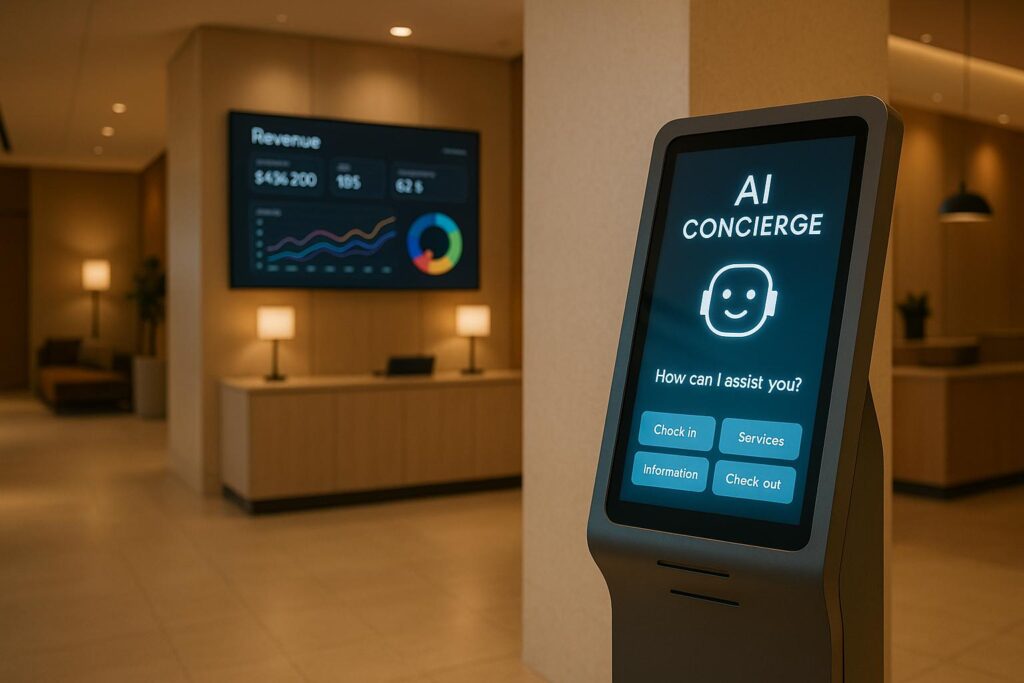
The hospitality industry is undergoing a transformative shift in 2025, driven by technological innovation, changing customer behavior, and evolving operational challenges. As artificial intelligence (AI) becomes central to business strategies and novel revenue metrics redefine profitability, hotels are adapting to remain competitive and meet new expectations. This article explores key trends shaping the industry, as presented by Joyce Galvan, Vice President of Customer Success at Duetto, during a recent industry event.
From leveraging AI for personalized guest experiences to navigating economic volatility with smarter forecasting tools, let’s dive into how the modern hotel landscape is evolving.
The Core of Transformation: AI and Data at the Helm
Artificial intelligence isn’t a future concept – it’s already reshaping the hospitality industry. According to Galvan, AI’s primary value lies in its ability to process immense amounts of data, uncover actionable insights, and facilitate rapid decision-making.
1. AI’s Role in Personalization
Modern travelers demand experiences that go beyond traditional amenities. Generational shifts, particularly the expectations of Millennials and Gen Z, are driving the need for hyper-personalized offerings. These younger demographics value digital experiences and expect hotels to anticipate their preferences without requiring much input. For instance:
- Millennials often prefer seamless digital interactions, such as self-check-in and tailored recommendations.
- Gen Z is willing to share data but values variety and novelty, rejecting repetitive travel experiences.
AI enables hotels to gather, analyze, and utilize guest data more effectively, customizing touchpoints throughout the customer journey. This approach helps build loyalty in an era where traditional repeat business models no longer dominate.
2. Dynamic Pricing and Forecasting
Economic volatility is a significant challenge for hoteliers in 2025. From fluctuating travel demands to unpredictable geopolitical events, pricing strategies must be flexible and responsive. Dynamic pricing, powered by AI, now allows hotels to:
- Adjust rates instantly based on booking patterns and market conditions.
- Respond to last-minute shifts in demand, thanks to real-time data analysis.
- Mitigate risks by improving forecasting accuracy.
Galvan emphasized that AI can process vast data streams, including external factors like news events, faster than any human team, enabling a proactive rather than reactive approach to pricing.
Addressing Operational and Economic Pain Points
1. Rising Costs and Labor Challenges
Hoteliers are grappling with increased operational expenses, including labor costs and energy utilities. AI tools help alleviate these pressures by optimizing resource allocation. For example:
- AI can forecast demand spikes, allowing hotels to schedule staff more efficiently.
- Automation streamlines repetitive tasks, freeing employees to focus on enhancing guest experiences.
These strategies not only improve profitability but also ensure a smoother, more consistent customer journey.
2. Evolving Revenue Metrics
Traditional metrics like Revenue Per Available Room (RevPAR) are no longer sufficient in today’s complex landscape. Instead, hoteliers are adopting more holistic profitability measures, such as:
- Total Revenue Per Occupied Room (TRevPAR): Accounts for ancillary revenue streams like food and beverage or spa services.
- Gross Operating Profit Per Available Room (GOPPAR): Focuses on operational profitability rather than just top-line revenue.
By integrating these metrics, hotels can align their sales, revenue management, and operational teams to create a unified strategy for maximizing profitability across all departments.
Adapting to Generational Shifts in Traveler Behavior
The behavior of new generations of travelers is reshaping the way hotels operate. Galvan highlighted how Millennials and Gen Z have distinct preferences that impact everything from booking patterns to loyalty programs.
- Millennials (29-40 years old):
They demand self-service options, transparency, and digital ease. They value efficiency and often prefer to avoid direct human interaction during their stay. - Gen Z (21-28 years old):
This group seeks unique, shareable experiences over repeat visits to the same location. They are less committed to brand loyalty but are more open to sharing personal information if it results in tailored offerings.
Understanding these shifts allows hotels to build strategies that cater to evolving demands, such as by investing in digital tools, creating unique experiences, and leveraging AI to predict and exceed expectations.
Building Resilience Amid Volatility
The global hospitality industry continues to face external disruptions, including economic instability, political uncertainty, and the lingering effects of the pandemic. Galvan underscored the importance of resilience, which lies in embracing technology and adapting to shifting market dynamics. Key strategies include:
- Investing in Technology:
More than 50% of surveyed hoteliers without a revenue management system are planning to adopt one this year. Additionally, 61% of those already using such systems intend to increase their technological investments. - Optimizing Space Utilization:
Hotels are exploring innovative ways to use their spaces, such as offering co-working areas or hosting non-traditional events. This flexible use of facilities creates additional revenue streams while catering to changing guest needs. - Improving Alignment Across Departments:
Revenue management no longer works in silos. Modern hotels are fostering collaboration between sales, marketing, and operations teams to align objectives and maximize overall profitability.
The Future of Hospitality: A Data-Driven Approach
Data is at the heart of innovation in 2025. However, the sheer volume of information collected – ranging from guest preferences to reservation patterns – can be overwhelming. Galvan warned that without proper tools, this wealth of data could go underutilized. She emphasized the need for AI-driven solutions that can:
- Consolidate data from multiple sources.
- Identify meaningful patterns and trends.
- Provide actionable insights to drive better decision-making.
For example, AI can help hoteliers refine their segmentation strategies by identifying shifts in guest behavior. Traditionally static segments, such as corporate or leisure travelers, are no longer rigid categories. Fluid segmentation enables hotels to adapt to real-time changes and target the most profitable audiences effectively.
Key Takeaways
- AI as the Catalyst: AI is enabling hotels to improve personalization, automate pricing, and streamline operations, giving them a competitive edge in an unpredictable market.
- Generational Insights: Millennials and Gen Z have unique expectations, necessitating a shift toward digital experiences and novelty-driven offerings.
- Dynamic Revenue Metrics: Metrics like TRevPAR and GOPPAR provide a more comprehensive view of profitability, integrating multiple revenue streams and expenses.
- Technological Investment: Adoption of revenue management systems and other advanced tools is on the rise, reflecting an industry-wide shift toward data-driven decision-making.
- Resilience through Adaptation: Hoteliers must embrace flexible strategies, such as dynamic pricing and space utilization, to navigate volatility and emerging challenges.
Conclusion
The hotel industry in 2025 is defined by its ability to adapt to change through data, technology, and a forward-thinking approach. By leveraging AI and evolving revenue strategies, hoteliers can stay ahead in a competitive market while meeting the demands of modern travelers. The future belongs to businesses willing to innovate, embrace generational shifts, and view challenges as opportunities for growth.
As Joyce Galvan aptly summarized, "The hoteliers who embrace AI and data-driven decision-making will lead the industry into a more profitable and customer-focused era."
Source: "Trends and Predictions for 2025 in the hospitality industry | FITURTECHY 2025 | #techYnegocio" – ithotelero, YouTube, Aug 20, 2025 – https://www.youtube.com/watch?v=bTAKJu2WFmw
Use: Embedded for reference. Brief quotes used for commentary/review.
