

Planning a workshop at a business hotel can be straightforward if you focus on three key areas: setting clear goals, understanding your audience, and selecting a venue that supports your needs. Here’s a quick breakdown:
- Set Clear Objectives: Define 2–3 measurable goals aligned with your organization’s priorities. For example, instead of "improve teamwork", aim for "implement two new collaboration strategies."
- Know Your Audience: Use surveys or interviews to understand participants' challenges, skill levels, and learning preferences. Tailor the content to resonate with their professional needs.
- Choose the Right Venue: Opt for a hotel with reliable Wi-Fi, flexible meeting spaces, and supportive staff. For instance, Aloft Trophy Club Westlake offers modern meeting rooms, advanced tech, and catering options.
Preparation is key - test equipment, organize materials, and build a schedule that balances learning with breaks. Wrap up with a recap, collect feedback, and follow up with resources to reinforce learning.
This approach ensures your workshop is productive, engaging, and leaves a lasting impact on participants.
How to plan a workshop | The workshop planning canvas by Toby Sinclair
Setting Workshop Goals and Knowing Your Audience
Before you start booking venues or organizing logistics, take a step back and establish the foundation for your workshop. This means defining your goals and understanding your audience. Without these two key elements, even the best location or setup won’t salvage a poorly designed workshop.
Setting Clear Objectives and Expected Results
Your workshop objectives are the compass that guides your planning process. Instead of making a long list of goals, focus on 2–3 priorities that address real organizational needs.
Start by crafting a mission statement for your workshop. This statement should answer one simple question: "What will make this workshop a success?". This step helps you move past vague training goals and focus on specific, measurable outcomes that align with your organization’s priorities.
Strong workshop objectives should be:
- Specific and measurable – For example, instead of saying "improve communication skills", aim for something like "implement three new communication protocols to boost cross-departmental collaboration."
- Realistic and achievable – Set goals participants can reasonably accomplish within the workshop's timeframe.
- Time-bound – Make sure you have clear deadlines for achieving results.
- Aligned with organizational priorities – Ensure the workshop supports larger business goals.
Having clear objectives leads to measurable improvements. For instance, one company that focused on specific business challenges during a workshop reported a 12% increase in profitability afterward.
Once your objectives are in place, you can tailor the workshop content to meet your audience’s needs.
Understanding Your Participants
To create a meaningful experience, you need to know who’s in the room. Understanding your audience’s experiences, challenges, and learning preferences allows you to design content that resonates.
Start by building learner personas based on your research. These personas should include details like participants’ backgrounds, skill levels, daily challenges, and learning goals. For instance, if you’re working with mid-level managers, find out if they’re new to leadership or seasoned supervisors refining specific skills.
"Understanding your audience is paramount for effective communication... Tailor your message to resonate with their values and aspirations." – Pooja Banerjee, IBEN-MYP Design & IBDP-IGCSE CS Facilitator
The importance of knowing your audience is clear. Events that use audience segmentation strategies see an average 19% boost in revenue and a 21% increase in attendance compared to those that don’t. When your content reflects attendees’ interests and professional backgrounds, they’re more likely to engage and gain value.
How to gather insights about participants:
- Pre-workshop surveys to identify challenges, preferred learning styles, and desired skills.
- Interviews with key participants to understand their responsibilities and pain points.
- Stakeholder meetings to align leadership and participants on the workshop’s goals.
It’s also important to consider group dynamics. A workshop with senior executives and entry-level employees will require a different approach than one designed for a group of peers at similar career stages. Tailoring your activities to the group ensures everyone stays engaged.
Finally, share the workshop’s purpose with your participants. When people see how the training connects to their challenges and career goals, they’re far more motivated. Linking the content to real-world scenarios transforms a standard training session into a meaningful professional development experience.
The ultimate aim is to design a workshop where every participant feels connected to the content and sees how the skills they gain will make a difference in their work.
Selecting Your Venue: Aloft Trophy Club Westlake
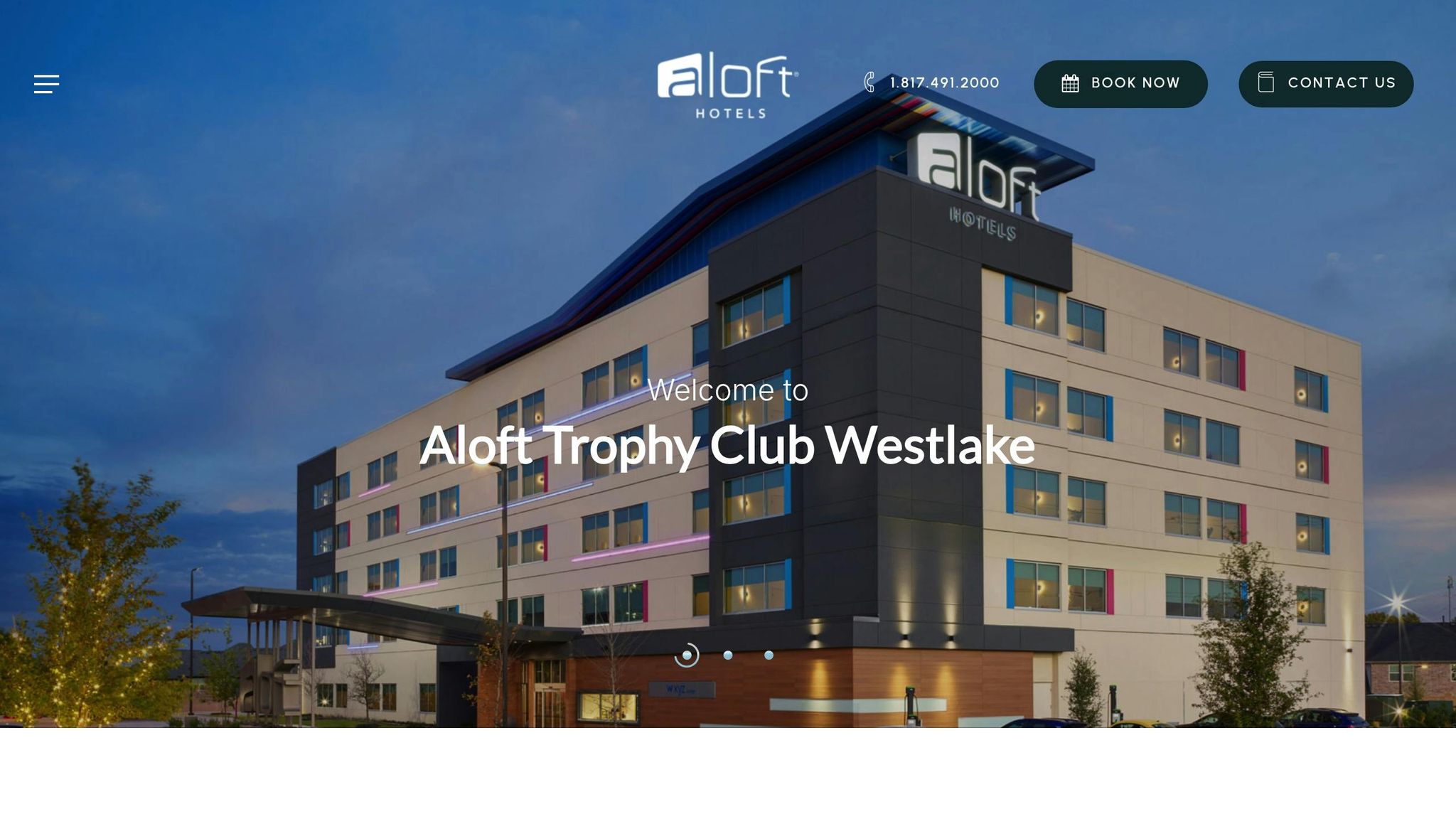
Once you’ve defined your goals and audience, choosing the perfect venue becomes a key step. Aloft Trophy Club Westlake delivers both modern amenities and a professional setting tailored to the needs of business workshops. Its location near major corporate hubs like Charles Schwab and Fidelity makes it a practical choice, cutting down on travel time and keeping the focus on your event. Let’s dive into the details of what makes this venue stand out.
Reviewing Meeting Spaces and Available Technology
The main meeting room at Aloft Trophy Club Westlake spans 2,242 square feet, comfortably hosting up to 156 people in a reception-style layout. It can also be divided into two breakout rooms, offering flexibility for smaller group sessions. With floor-to-ceiling windows and patio access, the space encourages natural light and provides options for breaks or team-building activities.
Here’s a breakdown of the room setup options and their capacities:
| Setup Style | Capacity | Ideal For |
|---|---|---|
| Theater | 80 | Presentations and keynote speeches |
| Schoolroom | 40 | Interactive sessions with note-taking |
| Conference | 20 | Small group discussions and brainstorming |
| U-Shape | 24 | Facilitated discussions and Q&A sessions |
| Banquet | 80 | Workshops involving meals or networking |
The venue is equipped with technology to ensure seamless presentations and collaboration. TVs, projectors, a PA system, and high-speed WiFi are all available, along with essential materials like easels, flip charts, and podiums. For last-minute needs, the business center provides access to computers, printers, and fax services.
Working with Hotel Staff
What truly sets Aloft Trophy Club Westlake apart is its dedicated team. They work closely with you to customize every detail, ensuring your workshop runs smoothly and meets your goals. This personalized approach can elevate your event from simply good to unforgettable.
Take Erin Nawrocki’s experience, for example. She gave the venue a glowing 5-star review, praising Mandy and her team for tailoring every aspect to her group of 40 attendees. "The meeting space was impressive, and the staff was the best", she shared.
Catering Options
The hotel offers catering at fixed rates, making it easy to plan meals and breaks:
- Continental breakfast: $25 per person
- Lunch and dinner: $65 per person
- Breaks: $25 to $45 per person
The staff can help you schedule these meals and breaks to align with your agenda, whether it’s an afternoon snack during a transition or a lunch break to encourage networking.
Seamless Transitions
Need to switch from a theater-style setup in the morning to breakout groups in the afternoon? The team handles room reconfigurations efficiently, ensuring minimal disruptions to your schedule.
For an additional option, the W XYZ Lounge provides a relaxed setting for networking sessions or informal wrap-ups. When booking, connect with the hotel’s sales team to discuss your needs. They can coordinate group room blocks for overnight attendees and manage all logistical details, leaving you free to focus on your workshop content.
sbb-itb-1e56dfa
Organizing Workshop Details and Participant Experience
With your venue secured and logistics in place, it’s time to fine-tune your agenda and use the available amenities to keep participants engaged and energized.
Building a Productive Workshop Schedule
A good schedule strikes the right balance between focused learning and much-needed breaks. Instead of lengthy, draining sessions, break your workshop into manageable chunks that keep participants attentive and involved.
"A well-structured agenda is crucial for a successful session. Break the workshop into digestible segments."
Begin with a 10–15 minute introduction to outline expectations and help participants connect. Follow this with 30–60 minute sessions that focus on specific learning objectives. This approach avoids cognitive fatigue while ensuring you cover meaningful content.
Interactive elements are key to keeping the energy up and improving retention. For instance, Mural managed to cut a four-hour session down to two hours by incorporating tools like polls, pre-session assignments, and videos.
To keep things running smoothly, consider a "parking lot" system where off-topic questions or ideas are noted for later discussion, ensuring the agenda stays on track. Additionally, schedule quick check-ins every 45–60 minutes to gauge alignment and energy levels. A mix of group discussions, hands-on activities, and solo reflection time can cater to different learning preferences.
And don’t forget to use the unique amenities of the venue to enhance the overall flow of your workshop.
Using Hotel Services to Improve the Experience
The amenities at Aloft Trophy Club Westlake can elevate your workshop from ordinary to memorable. The hotel’s modern design and versatile spaces create natural opportunities for breaks and transitions, keeping participants refreshed and focused.
For longer sessions, consider a short poolside break. A change of scenery and some fresh air can spark creativity and re-energize attendees for the next session.
The RE:Charge Gym is another great option for participants who value staying active. Early morning or evening access to the gym can boost their mood and performance throughout the event.
Practical amenities like complimentary Wi-Fi and lobby coffee/tea service allow participants to handle urgent tasks during breaks without disrupting the flow of the workshop. Additionally, the on-site convenience store ensures last-minute needs - like snacks, chargers, or supplies - are easily met, keeping everything on track.
Emily Carter from Deloitte experienced these benefits firsthand during a regional sales conference in March 2025. With 80 attendees, her event achieved a 92% satisfaction rate. Participants highlighted "the convenience of on-site amenities and the responsiveness of the hotel staff" as key contributors to its success.
Once your schedule and venue details are set, turn your attention to prepping materials and testing equipment to avoid any last-minute hiccups.
Getting Materials Ready and Testing Equipment
Preparation is your best defense against technical issues. Arrive 60–90 minutes before the first session to test equipment and resolve any problems.
Start by testing audiovisual equipment using your actual presentation files. This includes checking display quality, audio clarity, and microphone levels (especially for larger groups). Make sure the high-speed Wi-Fi can handle your requirements, particularly if participants will access online resources or if your presentation involves streaming content. Test the connection from various spots in the room to ensure stability.
Always have backup materials. Bring printed handouts even if you plan to share digital copies, and save your slides in multiple formats. While the hotel’s business center can provide computers and printers, having your own backups can save time and prevent delays.
Set up flip charts, easels, and markers in advance, checking that they’re functional and positioned for clear visibility without blocking your main presentation area. Create a checklist for essentials like extension cords, adapters, spare batteries, and any specialized equipment. While hotel staff may provide some basics, having your own supplies ensures you’re not caught off guard.
If your workshop includes breakout sessions, rehearse transitions between spaces. This helps you plan realistic timing for movements and keeps the schedule running smoothly.
Finishing Strong: Post-Workshop Actions
The way a workshop wraps up can make all the difference in whether the lessons stick or quickly fade away. Here’s how to ensure participants leave with lasting value.
Reviewing Main Points and Achievements
Set aside 15–20 minutes at the end of your workshop to revisit its goals and celebrate the group’s accomplishments. Start by reviewing the objectives you outlined at the beginning. Highlight specific moments when those goals were met, giving participants a sense of achievement and reinforcing the value of their time.
To keep the energy up, use interactive recap methods. For example, ask participants to share their biggest insight or a specific action they plan to take within the next week. This kind of verbal commitment often increases the likelihood of follow-through.
You can also create a visual summary - whether on a flip chart or a digital board - that captures the workshop’s key takeaways. Share this summary in your follow-up materials so participants can easily refer back to it when applying what they’ve learned.
If there are any lingering questions or topics that need more attention, provide resources or recommendations for further exploration. Then, close with a clear, actionable next step. Instead of vague advice like "apply what you’ve learned", give specific guidance such as, “Schedule a 30-minute team meeting this week to discuss the new process.”
Finally, gather feedback from participants to fine-tune future workshops.
Collecting Feedback and Measuring Results
Getting meaningful feedback goes beyond handing out a basic satisfaction survey. It’s about capturing both immediate impressions and the long-term impact of your workshop.
"For effective feedback, use a mobile-accessible link with a 4-point Likert scale to prevent middle-option bias. Include aspects such as program duration, trainer's knowledge, skills, and attitude, as well as the program's design and effectiveness." - Dr. Sandhya Sheshadri, Senior L&D Professional
Short, focused post-training surveys are ideal. Keep them to 5–10 minutes and include a mix of rating scales and open-ended questions. Ask about the relevance of the content, pacing, facilitator effectiveness, and overall experience.
For deeper insights, consider hosting small focus groups right after the workshop. Gather 6–8 participants in a relaxed setting - like the venue’s lobby or a smaller meeting room - for a 20–30 minute discussion. These face-to-face conversations often reveal details that surveys might miss.
Follow up with key participants for one-on-one interviews within a week. These 15-minute chats can uncover specific challenges or suggestions that might not come up in group settings.
Digital surveys are also a great tool for immediate feedback. Platforms with mobile-friendly options allow participants to respond quickly while the experience is still fresh. A QR code linking to the survey makes it even easier - participants can scan it before they leave.
"Monitoring workshop feedback acts as a compass for ongoing development, making sure that every session serves as a springboard for excellence." - Dakshayani Manju, LinkedIn Top Voice
When reviewing feedback, look for patterns in the responses. Group similar comments together to identify common themes. For numerical data, calculate averages and focus on areas where scores are consistently low - these are your priorities for improvement.
But collecting feedback is only half the job. Act on it. If multiple participants mention that a section felt rushed, adjust the timing for future workshops. If the venue received glowing reviews, take note of what worked so you can replicate it.
Feedback isn’t just about reflection - it’s a tool for refining your approach and keeping participants engaged long after the workshop ends.
Staying Connected After the Workshop
The learning shouldn’t stop when the workshop ends. A structured follow-up plan helps reinforce the material and keeps participants connected.
Send out a follow-up email within 24–48 hours. Include presentation slides, resource links, contact information for networking, and any promised materials. Don’t forget to attach the visual summary you created during the wrap-up session - it’s a handy reference for participants.
Consider setting up a shared digital space for continued discussions and progress updates. This could be a LinkedIn group, Slack channel, or even a simple email thread. The goal is to keep the momentum going and maintain the connections formed during the workshop.
Schedule check-ins at key intervals, like 30 and 90 days after the workshop. Use short surveys to measure long-term impact and identify participants who might need extra support. Ask targeted questions about what they’ve implemented and any challenges they’ve faced.
Offer optional office hours or follow-up sessions for participants seeking additional guidance. These could be virtual 30-minute sessions where you address specific implementation questions or challenges.
Another way to extend learning is by creating a resource library. Include templates, checklists, recommended readings, and video tutorials to support participants as they apply what they’ve learned.
If your budget allows, consider hosting a refresher session at a professional venue like Aloft Trophy Club Westlake. Bringing participants back together 60–90 days later for a half-day session can significantly boost retention and help them apply concepts more effectively. The right setting, combined with reliable technology, can make these follow-ups both impactful and memorable.
Conclusion: Creating a Successful Workshop Event
Hosting a successful workshop requires more than just good content - it calls for clear goals, efficient logistics, and an environment that encourages meaningful connections. Picking the right venue plays a key role in shaping the overall experience, ensuring everything runs smoothly while leaving a lasting impression.
Aloft Trophy Club Westlake is a standout choice for corporate training workshops, thanks to its modern facilities and professional amenities. Its 2,242-square-foot Tactic meeting room is designed to accommodate various setups, from theater seating to breakout sessions, making it versatile for different workshop needs. With floor-to-ceiling windows that flood the space with natural light and advanced technology to support seamless presentations, it creates an ideal learning environment.
Located near major corporate headquarters and boasting a 4.6 rating on TripAdvisor, this venue is especially appealing for business travelers. Beyond the meeting room, participants can recharge in outdoor patio spaces or network informally at the W XYZ Lounge, adding a refreshing balance to the day.
Aloft Trophy Club Westlake also simplifies workshop planning with features like complimentary Wi-Fi, digital check-in, and on-site catering - all designed to handle logistical details so you can focus on delivering impactful content.
Its contemporary design, cutting-edge technology, and attentive service create a setting that fosters learning and engagement. These elements not only enhance participant focus but also improve knowledge retention, ensuring attendees leave with actionable insights.
When combined with thoughtful planning and engaging content, a venue like Aloft Trophy Club Westlake can transform your workshop into an unforgettable experience. By prioritizing participant comfort and providing a professional atmosphere, you set the stage for both immediate success and long-term business benefits.
FAQs
How can I gather valuable insights about participants before hosting a workshop?
To make sure your workshop aligns with what participants are looking for, start by collecting feedback before the event. Send out pre-event surveys to understand their goals, experience levels, and what they hope to gain. If you want to dig a little deeper, consider scheduling quick one-on-one chats to gather more personalized insights.
Reaching out ahead of time doesn’t just help you fine-tune your content - it also builds a connection with attendees, setting the stage for a more interactive and meaningful workshop.
How can I make sure the workshop content meets participants' needs and supports organizational goals?
To make your workshop impactful and relevant, begin with a needs assessment. This means digging into the challenges and goals your participants face. You can gather this information through surveys, one-on-one interviews, or even feedback from previous events. Engaging with key stakeholders early on is also crucial - it helps you understand the organization’s priorities and ensures the workshop content aligns with its broader goals.
Using these insights to shape your agenda will not only create a more engaging experience for attendees but also deliver outcomes that matter to the organization. A well-thought-out workshop does more than just inform - it shows your team that professional development is a priority worth investing in.
What should I consider when choosing a business hotel for hosting a workshop?
When choosing a business hotel for your workshop, location and accessibility should top your list. It’s important to pick a venue that’s easy for attendees to reach, especially if they’re coming from out of town. Hotels near major transportation hubs or corporate districts are often the most convenient options.
Make sure the hotel provides flexible meeting spaces that can adapt to your group size and the type of workshop you’re hosting. A solid technology setup is a must - think high-speed WiFi, audio-visual equipment, and plenty of power outlets to keep everyone connected and productive.
Extras like on-site catering, a dedicated events team, and nearby lodging can make the entire process smoother for both organizers and participants. For instance, a venue like Aloft Trophy Club Westlake offers adaptable event spaces, tech-forward setups, and a variety of amenities to simplify your workshop planning and execution.