

Corporate events generate over 10% of global CO2 emissions, with travel alone often accounting for 70-90% of an event’s footprint. Planning carbon-neutral events not only reduces emissions but also aligns with consumer expectations – 80% of people consider environmental efforts when choosing companies to support. Here’s how you can create a low-impact event:
- Measure Your Carbon Footprint: Use tools like Climate Vault or atmosfair to calculate emissions from travel, energy use, and catering.
- Choose Sustainable Venues: Opt for locations with renewable energy sources and certifications like LEED or ENERGY STAR.
- Reduce Transportation Emissions: Encourage public transit, carpools, or hybrid/virtual attendance.
- Optimize Energy Use: Use venues with efficient lighting, HVAC systems, and renewable energy.
- Eco-Friendly Catering: Prioritize plant-based, locally sourced food and compostable materials.
- Manage Waste: Set up recycling, composting stations, and go digital for programs and tickets.
- Purchase Carbon Offsets: Invest in verified programs to neutralize unavoidable emissions.
- Report Results: Share data on emissions reductions and offset projects to build trust and inspire others.

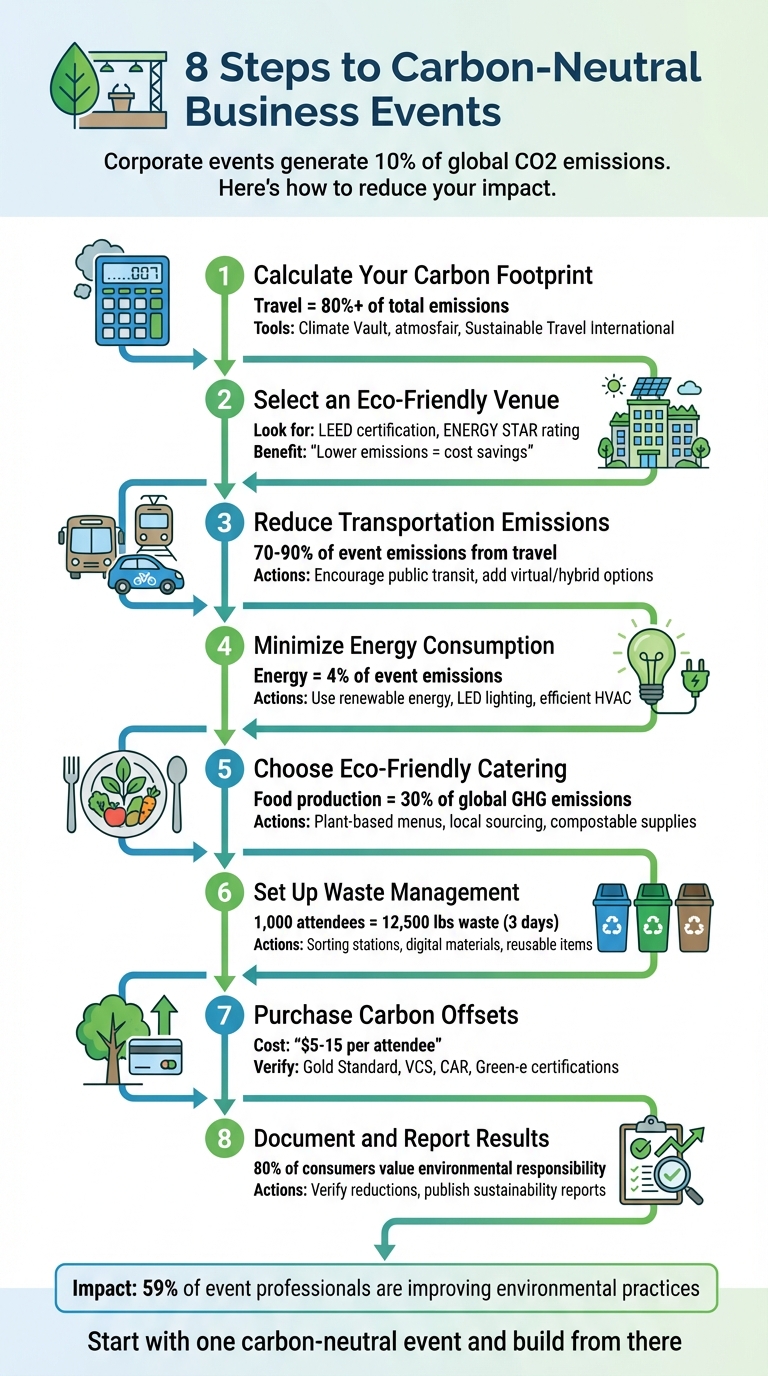
8-Step Process for Planning Carbon-Neutral Business Events
How ConferenceDirect Produced Its First Carbon Neutral Corporate Event Behind the Scenes with Larry


Step 1: Calculate Your Event’s Carbon Footprint
Before you can reduce your event’s environmental impact, you need to understand where emissions are coming from. As Nancy Bsales, Manager of Carbon Solutions at TerraPass, wisely puts it:
"You can’t manage what you don’t measure." – Nancy Bsales
Pinpoint Key Emission Sources
For most events, travel is the biggest contributor to carbon emissions – often making up more than 80% of the total footprint. Long-distance flights, in particular, can dramatically increase per-attendee emissions. Other contributors include energy use at the venue, such as lighting, heating, and cooling, which account for a smaller but still notable portion. Then there’s catering: the type of food served matters, with beef-heavy menus leaving a much larger carbon footprint compared to options like chicken. Even printed materials and waste disposal can add up.
Leverage Carbon Footprint Tools
Luckily, there are tools available to help you estimate emissions. For instance, Sustainable Travel International‘s Event Carbon Footprinting Tool is a free resource you can use. A great example of this in action is Fast Company’s ninth annual Innovation Festival in New York City (2023). Damian Slattery, SVP of Marketing at Fast Company, led an initiative using Climate Vault’s Event Emissions Calculator to measure and offset the carbon impact of travel, lodging, meals, and venue energy, resulting in a carbon-neutral event.
Another option is the atmosfair CO2 Event Calculator, which follows the VDR standard for business travel and can provide estimates even when detailed data is unavailable. For international events, the Green Events Tool (GET) – developed by UNEP, UNFCCC, and GORD – offers additional precision by factoring in country-specific grid emissions and includes a sustainability checklist.
To ensure accurate calculations, communicate with vendors early in the planning process. Let them know you’ll need carbon impact data post-event. Ask for specific details like kilowatt-hours consumed, flight routes, meal quantities by type, and waste weight. Many modern platforms can generate detailed emissions reports automatically, breaking down the data by source and making it easier to share insights with stakeholders.
Once you’ve measured your event’s emissions, you’ll be ready to take the next step: selecting an eco-conscious venue to minimize the environmental impact further.
Step 2: Select an Eco-Friendly Venue
Once you’ve calculated your event’s emissions, the next move is to reduce them by choosing a venue that prioritizes sustainability. Nancy Bsales from TerraPass highlights an important point:
"When you can lower your emissions, you are usually saving money, because it’s energy based." – Nancy Bsales
Look for Green Certifications
Start by checking if the venue has a LEED certification, which indicates it meets rigorous standards for sustainability and energy efficiency. Another helpful tool is ENERGY STAR, which lets you evaluate a venue’s energy performance before making a decision. For a more detailed comparison of multiple properties, the Cornell University Hotel Sustainability Benchmarking Tool is an excellent resource to assess the carbon footprint and energy consumption of hotels.
When sending out Requests for Proposals (RFPs), ask direct yes/no questions about the venue’s eco-friendly practices. For example, inquire about their use of LED lighting, renewable energy, or high-efficiency HVAC systems. Some hotel chains, such as Hilton, use tools like LightStay to track and report data on carbon, energy, water, and waste for events. You can even request a contract clause requiring the venue to purchase offsets for the energy used during your event and guest stays. Once you’ve verified certifications and sustainability measures, consider venues like Aloft Trophy Club Westlake.
Aloft Trophy Club Westlake as a Meeting Space Option

If your event is in the Dallas–Fort Worth area, Aloft Trophy Club Westlake is worth considering. Their Tactic Meeting Room is a modern, tech-equipped space designed for business events, featuring high-speed WiFi, advanced audio/visual tools, and flexible layouts. Located near corporate offices, the venue helps reduce travel needs for attendees. It also offers energy-efficient event spaces, on-site dining, leisure options, and complimentary WiFi. With accommodations, dining, and meeting facilities all in one spot, attendees can walk between activities instead of driving, cutting down the event’s overall carbon footprint even further.
Step 3: Reduce Transportation Emissions
Transportation is responsible for a staggering 70% to 90% of total event emissions, making it the largest contributor to your event’s carbon footprint. Nancy Bsales from TerraPass highlights this stark reality:
"In 95 percent of cases travel is more than 80 percent of your total footprint." – Nancy Bsales
With this in mind, it’s essential to focus on practical ways to minimize travel-related emissions.
Encourage Carpools and Public Transit
Selecting a venue near major transit hubs or in a central location can significantly reduce the need for long-distance individual travel. Dave Rochlin from ClimatePath raises important considerations:
"How far is the venue from the airport? Is there a group transportation option that I can encourage as a host, or are people going to choose rental cars or personal rideshare services?" – Dave Rochlin
To make eco-friendly travel easier, provide attendees with digital transit maps and walking directions via your event website, app, or email updates. If you’re arranging shuttles, collaborate with companies that use biofuels or electric vehicles or those participating in the EPA’s SmartWay program. Offering pre-paid public transit passes can also encourage attendees to opt for buses or trains instead of taxis or rental cars.
To further motivate attendees, consider offering incentives or rewards for those who use carpools, public transportation, or cycling and share their efforts. For offsite activities, choose locations within walking distance of the main event and provide clear walking directions to discourage short car trips.
Add Virtual or Hybrid Options
Air travel often dominates event-related emissions, so incorporating virtual participation options is one of the most effective ways to reduce your event’s environmental impact. A hybrid format allows you to lower the number of attendees flying in while still maintaining engagement and expanding your event’s reach.
Modern venues are typically equipped with high-speed Wi-Fi, advanced A/V systems, and teleconferencing tools, ensuring remote attendees have an experience comparable to in-person participants. Highlighting how virtual options align with your carbon-neutral goals can appeal to eco-conscious attendees and encourage them to choose the lower-impact option.
Additionally, embedding a travel carbon calculator on your event website can help attendees evaluate the environmental impact of their travel choices and explore alternatives.
Step 4: Minimize Energy Consumption
While transportation is the biggest contributor to event emissions, improving energy efficiency can both lower your carbon footprint and cut costs. On average, energy use makes up around 4% of an event’s total emissions.
Use Renewable Energy Sources
Choosing a venue powered by renewable energy is a quick and impactful way to shrink your event’s carbon impact. Seek out facilities with certifications for 100% renewable energy, such as those sourcing power from solar or wind. For instance, ACC Liverpool operates as a Carbon Neutral Event Campus, using fully renewable energy and offering detailed post-event reports on energy usage, including areas like temperature control and lighting.
If your chosen venue doesn’t generate renewable energy on-site, ask if they purchase Green-e certified renewable energy from their utility provider. You can also negotiate contract clauses requiring the venue to buy carbon offsets for the energy used in guest rooms and meeting spaces. For outdoor events, maximize natural light and ventilation to cut down on artificial lighting and climate control needs.
Install Energy-Efficient Equipment
Make sure LED lighting is in place, and use motion sensors to turn off equipment in unoccupied areas. Work with venue staff to implement energy-efficient AV systems and ensure all hardware is powered down after hours.
For events held regularly, consider retrofitting venues with high-efficiency HVAC systems and setting strict temperature guidelines to avoid unnecessary energy use. Tools like Hilton’s LightStay platform can track and compare energy usage across multiple events, giving you actionable data to refine future plans. Additionally, avoid portable generators for offsite activities whenever possible, as they can significantly increase emissions.
Once energy consumption is under control, the next step is to focus on eco-friendly catering and sustainable material choices to further reduce your event’s environmental impact.
sbb-itb-1e56dfa
Step 5: Choose Eco-Friendly Catering and Materials
When planning a carbon-neutral event, catering decisions play a huge role in reducing the overall environmental impact. Food production alone accounts for nearly 30% of global greenhouse gas emissions, making it one of the most impactful areas to address. To put it into perspective, a typical conference generates about 1.89 kg of waste per attendee daily, with nearly two-thirds of that waste ending up in landfills. By carefully selecting catering options, you can significantly cut emissions and reduce waste.
Source Local and Plant-Based Food
Switching to plant-based menus is a straightforward way to lower carbon emissions. For example, beef produces nearly four times the emissions of chicken and double that of pork. Meanwhile, plant-based proteins like lentils, tofu, and chickpeas have the smallest environmental impact. Nancy Bsales, Manager of Carbon Solutions at TerraPass, explains:
"The amount of CO2 for one meal doesn’t seem like much, but when you are talking about thousands of people, this is where you can make a difference".
Partner with caterers who prioritize local and seasonal ingredients. This reduces transportation emissions and supports regional farmers. For example, serving strawberries from a nearby farm during their peak season is far more sustainable than importing them from overseas. If seafood is on the menu, ensure it’s responsibly sourced by choosing options certified by the Marine Stewardship Council (MSC) or recommended by Monterey Bay Aquarium‘s Seafood Watch.
To avoid unnecessary waste, collect dietary preferences during registration to better estimate food quantities. Any surplus food can be donated to local food banks, ensuring it doesn’t go to waste.
Use Reusable or Compostable Supplies
Ditch single-use plastics and opt for compostable options made from materials like bamboo, sugarcane bagasse, or cornstarch-based bioplastics. For example, sugarcane bagasse is perfect for hot foods due to its heat resistance, while bamboo adds a stylish touch to more formal settings. Set up clearly marked water refill stations and waste sorting areas to ensure compostable items are properly disposed of.
Where possible, go digital to cut down on paper waste – use QR codes for menus, event programs, and tickets. For items like lanyards and badge holders, encourage attendees to return them at the end of the event so they can be reused in the future. Additionally, work with caterers who emphasize sustainable practices, such as sourcing eco-friendly materials, using energy-efficient equipment, and composting food waste.
With these steps, you’re well on your way to reducing your event’s environmental impact. Next, let’s look at waste management practices to complete your sustainability strategy.
Step 6: Set Up Waste Management and Recycling
Handling waste effectively can make a big difference in reducing the environmental impact of your event. Did you know that a three-day event with 1,000 attendees can produce up to 12,500 pounds of waste, with nearly two-thirds of it ending up in landfills? The good news is, with the right systems in place, most of this waste doesn’t have to go to waste.
Create Waste Sorting Stations
Strategically place waste sorting stations in high-traffic areas like registration desks, dining spots, and exits. Each station should have separate bins for recyclables (think paper, cardboard, and plastics), compostables (like food scraps and biodegradable utensils), and landfill waste. To make it easy for attendees, use clear visual signage with photos to minimize confusion and avoid cross-contamination.
Coordinate with your venue or waste service provider to ensure you have enough bins. Also, consider donating leftover perishable food to local shelters or food recovery programs instead of letting it contribute to landfill methane emissions. Another smart move? Set up a collection point for reusable items like lanyards and badge holders so they can be cleaned and reused at future events.
Once you’ve got waste sorting covered, take it a step further by cutting down on materials altogether.
Switch to Digital Materials
Ditch the paper! Replace printed items like invitations, schedules, and programs with digital versions. QR codes are a great way to share tickets, agendas, and venue maps. You can also use mobile apps to provide real-time updates, interactive maps, and networking features, completely eliminating paper waste.
If you absolutely need physical signage, choose reusable options like whiteboards, chalkboards, or modular displays that can be updated and used across multiple events. For branding, skip the single-use banners and consider projecting your logos and messages onto walls using AV equipment. It’s a simple yet impactful way to keep waste in check while keeping your event visually appealing.
Step 7: Purchase Carbon Offsets
Once you’ve minimized emissions through careful planning, the next step is to address the emissions you can’t avoid by purchasing carbon offsets. This is how you can take your event to full carbon neutrality.
Carbon offsets work by funding projects that actively reduce greenhouse gases, effectively balancing out the emissions you couldn’t eliminate. The key is to select reputable programs and ensure your attendees understand the positive difference your efforts are making.
Select Verified Offset Programs
When choosing offset programs, stick to those that are verified by trusted organizations such as Gold Standard, Verified Carbon Standard (VCS), Climate Action Reserve (CAR), or Green-e. These certifications ensure the projects meet rigorous standards, including:
- Additionality: The project wouldn’t exist without your funding.
- Permanence: The emissions reductions are long-lasting.
- Prevention of Double-Counting: Credits are not sold more than once.
Offset projects vary widely. They can support renewable energy developments like wind and solar farms, reforestation efforts, methane capture from landfills, or even coastal ecosystem restoration. For example, the Austin Convention Center has been purchasing verified credits since 2013, supporting projects like the GreenTrees Forestry Project in the Mississippi Alluvial Valley and the Crow Lake Wind Project in South Dakota, which powers 129,000 homes.
When evaluating providers, ask important questions: How do they calculate emissions? What portion of funds goes toward administrative costs? Do they provide audited financial statements? This due diligence ensures your investment is impactful.
Costs for offsets typically range from $5 to $15 per attendee, depending on factors like travel distance and project type. To calculate your needs more accurately, tools like the Green-e carbon emissions calculator or Hilton’s LightStay Meeting Impact Calculator can help. After purchasing offsets, request a retirement certificate as proof that the credits have been permanently retired on your behalf.
Once you’ve selected a program, make sure to share your efforts with your audience.
Share Offset Efforts with Attendees
Being transparent about your offset initiatives helps build trust. Once you’ve purchased offsets, let your attendees and corporate partners know through pre-event emails, social media updates, and on-site signage. Highlight projects with compelling stories – such as a specific reforestation site or a local wind farm – so you can share photos and details that resonate with your audience.
To encourage broader participation, you might include the offset cost in registration fees as an "opt-out" option rather than an "opt-in." Research shows that when offsets are pre-checked, participation rates can increase significantly – from under 5% to nearly 30%. For example, the Geological Society of America used a tiered offset fee for its October 2021 annual meeting in Portland, charging attendees $4 for domestic travel and $30 for those flying from Australia or Asia. This approach not only funds impactful climate projects but also reinforces sustainability as a core value of your event.
Make use of marketing toolkits provided by your offset partner to share updates and impact reports. The more visible your efforts, the more your attendees will appreciate – and support – your commitment to carbon neutrality.
Step 8: Document and Report Results
Showcasing your carbon-neutral achievements can help build trust and set a benchmark for future events.
Verify Emissions Reductions
Start by comparing your actual emissions to the initial estimates. Automated tools like Hilton’s LightStay platform or Climate Vault’s Event Emissions Calculator can help track key metrics, including carbon, energy, water, and waste data. To ensure credibility, request verification certificates from your offset provider. These certificates should confirm that your carbon credits have been permanently retired and meet international standards such as Gold Standard or Verified Carbon Standard (VCS). For additional insights, use tools like the Cornell University Hotel Sustainability Benchmarking Tool to compare your event’s energy and water usage against data from thousands of hotels worldwide.
Once you’ve verified the data, the next step is sharing it in a meaningful way.
Publish Sustainability Reports
Prepare a detailed sustainability report that outlines your event’s total carbon footprint, major emission sources (noting that travel alone often accounts for 70–90% of emissions), resource consumption, and the specifics of your offset projects. Transparency fosters trust – studies show that 80% of consumers value environmental responsibility when making purchasing decisions, and 81% believe businesses play a critical role in improving the environment.
Distribute your report through multiple channels, such as pre-event emails, social media posts, and on-site materials. Many offset partners provide marketing toolkits with project photos and sample content to help you communicate your efforts effectively.
This documentation not only showcases your commitment but also creates a foundation for continuous improvement. Collect feedback from attendees and stakeholders on your sustainability initiatives, and use their input to refine future events. By sharing your results, you’re not just enhancing your brand – you’re motivating the entire events industry to strive for higher environmental standards.
Conclusion
Organizing a carbon-neutral business event isn’t just about reducing emissions – it’s about driving meaningful change that benefits your company, your attendees, and the planet. By implementing the eight steps outlined in this guide, you’re aligning your organization with the rising expectations of stakeholders while actively contributing to global sustainability efforts. Plus, these initiatives can enhance your brand’s reputation and give you an edge in a competitive market.
The financial aspect is compelling too. For a modest cost of $5 to $15 per attendee, investing in carbon offsets and energy-efficient practices can lead to significant long-term savings.
Consider this: the events industry is responsible for over 10% of global CO2 emissions. Every sustainable event you host helps shrink that number while also supporting CO2 reduction projects, biodiversity efforts, and even local job creation.
Your efforts go beyond just numbers. They educate attendees with actionable insights and demonstrate leadership in sustainability. In fact, 59% of North American event professionals are already working to improve their environmental impact. By stepping up, you’re not just planning events – you’re helping to set new industry standards.
Start small. Plan one carbon-neutral event, track your results, and share your achievements. With each step, you’ll not only advance your sustainability goals but also strengthen your organization’s position in the marketplace.
FAQs
How do I calculate the carbon footprint of my event?
To figure out your event’s carbon footprint, you’ll need to gather some key details. Start by noting energy consumption at the venue, meal specifics, attendee travel distances, and accommodation arrangements. Once you have this data, plug it into a trusted event carbon calculator. These tools analyze all the inputs to give you a clear picture of your event’s overall emissions.
Knowing this footprint allows you to explore ways to offset those emissions and work toward hosting a more eco-friendly event.
What are the best ways to reduce travel emissions when hosting a business event?
Travel is often the biggest contributor to an event’s carbon footprint, making it a crucial factor to address when planning a carbon-neutral gathering. A good starting point? Reduce the need for travel entirely by offering hybrid or virtual attendance options. For those attending in person, pick a venue that minimizes travel distances for the majority of your guests. For instance, Aloft Trophy Club Westlake in Trophy Club, Texas, is a great choice for attendees from the Dallas-Fort Worth area, cutting down on the need for long-haul flights.
Encourage attendees to opt for low-emission travel methods like carpooling, ride-sharing, or public transit. Providing shuttle services from nearby transit hubs can make these options even more accessible. For participants who need to fly, consider offering tools like a carbon calculator to help them measure and offset their travel emissions. Be sure to communicate clearly about the offset projects your event supports, building trust through transparency.
By blending virtual participation, smart venue choices, and low-carbon transportation options, you can meaningfully cut down the environmental impact of travel for your event.
What are carbon offsets, and how can I choose the right one for my event?
Carbon offsets work by counterbalancing the emissions produced by your event. This is achieved by funding projects that actively reduce or remove CO₂ from the atmosphere. Examples include reforestation efforts, investments in renewable energy, or the use of carbon-capture technologies. When you purchase these offsets, the corresponding credits are retired to reflect the emissions you’ve accounted for.
To select the right offset program, prioritize providers that offer third-party certifications, transparent reporting, and projects that align closely with your environmental goals. Look for programs that provide thorough documentation of retired credits and support initiatives such as forestry, clean energy, or advanced technologies that deliver measurable results.