
Hotels are transforming into dynamic spaces that balance work and social interaction, driven by the rise of remote work and "bleisure" travel. Modern travelers, especially Millennials and Gen Z, seek environments where they can be productive while connecting with others. This shift has led to reimagined hotel designs, flexible coworking areas, and curated events that cater to both professional and social needs. Key highlights include:
- Flexible Spaces: Hotels like Virgin Hotels Chicago and Crowne Plaza offer coworking areas with communal tables and private meeting spots.
- Social Hubs: Modern lobbies double as workspaces by day and gathering spots by night, encouraging networking and casual connections.
- Curated Events: Activities like wine tastings and networking sessions bring guests together and connect them with local communities.
- Balanced Amenities: Features like Wi-Fi, fitness centers, and pools support both work and relaxation.
While these spaces promote networking and community, challenges like noise and privacy concerns remain. Solutions include offering private rooms, quiet zones, and flexible layouts to cater to diverse preferences. Hotels that prioritize these needs are becoming key destinations for remote workers and travelers alike.
What Amenities Do Coworking Spaces Offer? – Learn About Libertarianism
Research Findings on Social Interaction in Hotel Workation Spaces
Recent research highlights how hotels are becoming hubs for social connections, especially as work dynamics evolve. With freelancers now making up 38% of the U.S. workforce and Millennials accounting for 36% by 2024, the demand for spaces that blend productivity with social interaction is growing.
Flexible Spaces for Networking and Collaboration
Hotels are reimagining their lobbies to serve dual purposes: workspaces by day and social hubs by night. Through movable furniture and flexible partitions, these spaces cater to both productivity and connection. Many hotels have adopted a coworking model, offering not just desks and reliable Wi-Fi but also HDTVs and curated local perks to attract both guests and nearby professionals.
Take Virgin Hotels Chicago, for example. Their "The Commons Co-Op" is a 2,600-square-foot coworking space that features communal tables, couches, bar seating, and private meeting rooms. Similarly, Crowne Plaza introduced Plaza Workspace areas back in 2017, blending communal workspaces with semi-private meeting spots and marketplaces stocked with grab-and-go snacks.
"People come in to have a coffee and socialize but also to work. We want people to sit in our lobbies and congregate and create that sense of space and sense of place." – Joel Rosen, president of hotel development group GFI Hospitality
This approach not only enhances functionality but also creates a sense of community within the hotel environment.
How Communal Areas Build Community
Modern hotel lobbies are evolving into vibrant public spaces where work and social interaction coexist. These open areas are designed to inspire, relax, and encourage connections.
Research shows that Millennials are 2.9 times more likely than Boomers to use hotels as client meeting spots and 1.8 times more likely to seek inspiration in these spaces. To meet these needs, hotels are crafting environments that balance open, sociable areas with quiet, private corners.
For instance, Hotel Schani in Vienna has integrated "Your Space", a coworking area within its lobby, fostering a network of like-minded individuals. Meanwhile, Hobo Hotel in Stockholm offers work-friendly spaces throughout its interior, blending communal wooden tables in the lobby with cozy nooks in the bar and lounge.
The design of these communal areas prioritizes connection, well-being, and local flavor. By offering zones that cater to both privacy and interaction, hotels are addressing the rise of remote work while encouraging a sense of community. These thoughtfully designed spaces often align with event strategies to create seamless workation experiences.
"We’re seeing much more flexible, interactive use of what is traditionally a hotel lobby. It’s breakfast space in the morning, it’s lunch space in the afternoon, it’s coworking space – people are working in their hotel of choice, because as an urban nomad, you pick places you feel are appropriate to have meetings or send emails or relax and have a drink." – Menno Hilberts, USA Managing Director, citizenM
Hotel Events and Guest Connections
Beyond physical spaces, hotels are elevating guest experiences through dynamic events. From casual networking sessions to themed entertainment, these events help guests build connections and leave lasting impressions. In fact, 86% of consumers say personalized experiences increase their loyalty.
Events also serve as bridges between guests and local communities. Hotels are transforming into social venues that blur the line between visitors and locals, fostering authentic connections. For instance, one hotel’s weekly "Drinks with the General Manager" sessions initially faced skepticism but later became a hit, driving client retention as guests adjusted travel plans to attend.
"Hotels are trying to change themselves into relevant social venues which blur the line between visitors and locals, and as they do so, they inevitably find that authenticity is the key. It can’t look like a clever business strategy. It has to genuinely feel like a part of the community." – Dean Minett
Cultural events and art exhibitions in hotel lobbies further enrich the guest experience, offering meaningful ways to connect with the local community.
Design Features and Amenities that Promote Social Engagement
As hotels adapt to meet the needs of modern workation guests, the design of their spaces and the amenities they offer play a crucial role in encouraging both casual social encounters and professional networking. Striking a balance between quiet, work-friendly environments and vibrant social spaces is essential, especially when 42% of guests prioritize calm settings while 82% look for fun and engaging experiences. This dual focus has driven hotels to carefully craft spaces and amenities that blend productivity with opportunities for connection.
Space Layout and Furniture for Interaction
Hotels are rethinking their layouts to create spaces that naturally encourage interaction. Modular seating arrangements, communal tables, and intuitive furniture design make it easy for guests to engage in conversations without feeling forced. Adding biophilic elements like greenery and natural materials enhances the ambiance, making spaces more inviting and relaxing.
Lighting and sight lines also play an important role. Clear pathways and intuitive wayfinding not only help guests navigate but also create opportunities for casual eye contact and spontaneous interactions. As Aytan Litwin, CEO of White Space, puts it, hotel lobbies have evolved into "the new public square". These thoughtful design choices lay the groundwork for amenities that cater to both work and social needs.
Amenities That Support Work and Socializing
Key amenities such as high-speed Wi-Fi, conveniently located power outlets, and appealing food and beverage options are staples for workation guests. Some hotels go beyond the basics, offering unique experiences like cooking classes at The Cooking School at Zero George Street Hotel in Charleston, South Carolina. These shared activities create memorable moments that bring people together.
Personalization is another growing trend, with 71% of customers expressing a desire for tailored experiences. Hotels are responding by offering customized options, from in-room fitness equipment to curated local adventures. Wellness amenities, such as fitness centers, pools, and hot tubs, also provide informal spaces where guests can connect through group activities or casual chats.
The demand for coworking spaces has surged as remote work becomes more common. The number of coworking spaces worldwide is expected to double from nearly 20,000 in 2020 to over 40,000 by 2024. Hotels are integrating coworking areas into their properties, giving business travelers and remote workers a place to stay productive while remaining open to networking opportunities. Additionally, flexible event spaces enhance the sense of community in workation settings.
Event Spaces for Community Building
Multipurpose event spaces are becoming key hubs for fostering connections among workation guests. These spaces can adapt throughout the day, hosting professional meetings in the morning and social gatherings in the evening. As Paul Wells, a partner at hotel design firm Studio Moren, explains:
"Hotels increasingly are hosting meetings and social events, not only because they are pleasant environments and beautifully designed spaces, but because they are relaxed and help to foster more open conversations." – Paul Wells
Curated programming draws guests out of their rooms and encourages interaction. Events can be tailored to guest demographics, hotel themes, or the time of day – offering quieter workshops during daylight hours and livelier gatherings in the evening. Activities like wine tastings, live music, morning yoga, or language exchange meetups provide natural icebreakers and shared experiences.
Collaborations with local businesses and artists add authenticity to hotel events while connecting guests to the surrounding community. Seasonal initiatives, such as rooftop movie nights in summer or holiday markets in winter, keep spaces dynamic and offer regular opportunities for social interaction.
The rise of "bleisure" travel – combining business with leisure – has further increased the need for flexible event spaces. According to Expedia’s Q4 Traveler Insights Report for 2022, 76% of business travelers planned to take a bleisure trip. This trend calls for venues that can seamlessly transition between professional and social uses, supporting both work goals and personal connections.
Hotels that position themselves as go-to venues for industry events can establish themselves as key destinations for professionals. By hosting regular gatherings, they nurture ongoing communities of guests who return repeatedly, building lasting relationships.
sbb-itb-1e56dfa
Case Study: Socializing Opportunities at Aloft Trophy Club Westlake
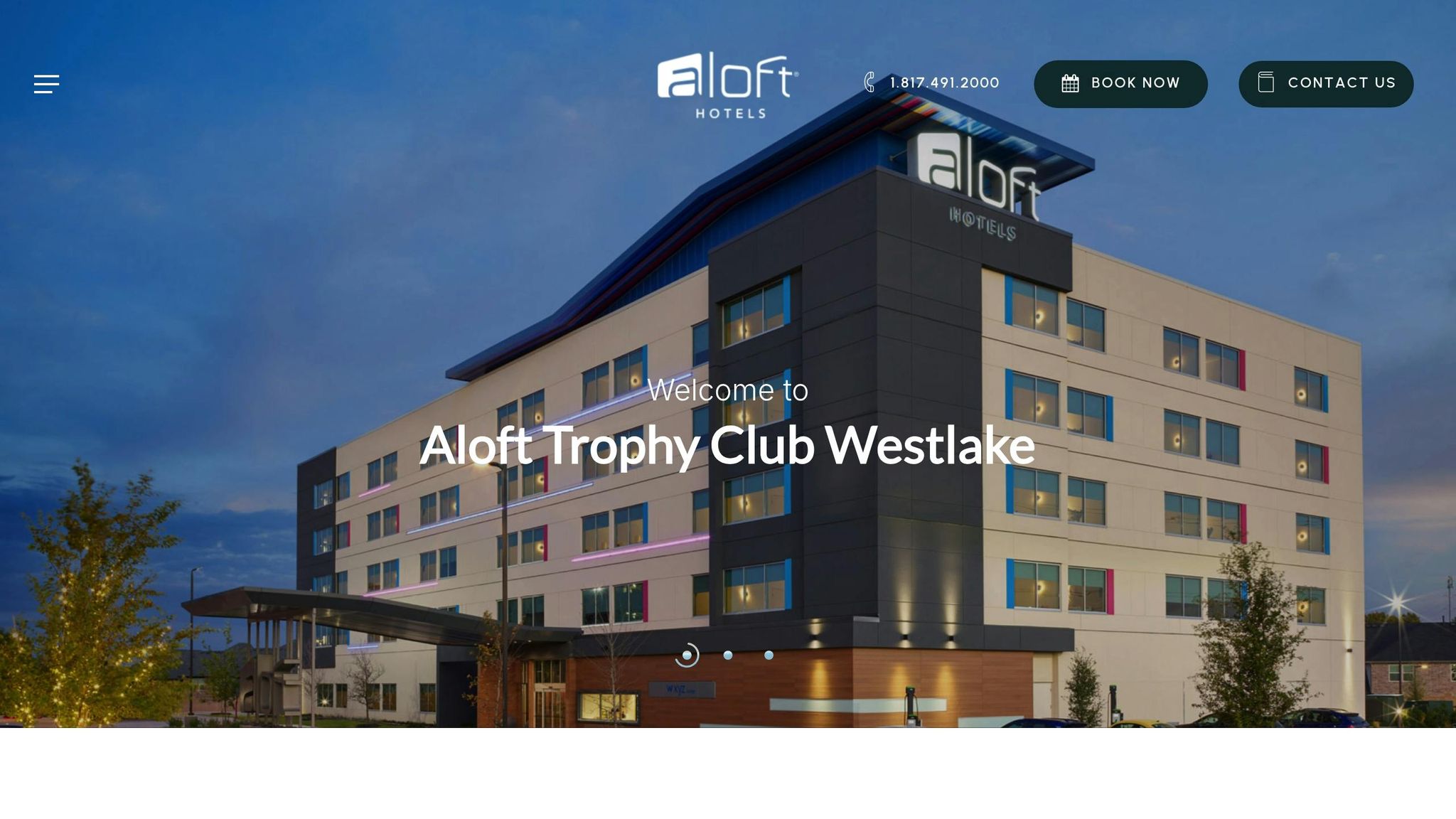
Aloft Trophy Club Westlake demonstrates how modern hotels can merge productivity with social interaction, creating a seamless work-life experience. Through thoughtful design and programming, the hotel offers a blend of work-friendly spaces and opportunities for connection. Below, we explore three standout features – dedicated communal areas, balanced amenities, and versatile event venues – that make this integration possible.
W XYZ Lounge and Communal Gathering Spaces
The W XYZ Lounge serves as the social centerpiece of Aloft Trophy Club Westlake, redefining the traditional hotel lobby into a dynamic, multifunctional space. Acting as a hub for both guests and locals, this area encourages interaction and fosters a sense of community.
Designed with flexibility in mind, the lounge transitions effortlessly throughout the day. In the morning, it doubles as a workspace complete with coffee, while in the evening, it transforms into a lively social spot for casual conversations and unwinding. The modular layout includes open areas for group interactions as well as quieter corners for focused work or intimate chats, catering to a variety of social and professional needs.
The lounge’s design encourages spontaneous connections by creating natural pathways that promote interaction. For travelers seeking to counter the isolation often felt on the road, this communal space offers a welcoming environment that bridges the gap between work and social connection.
Amenities Supporting Work-Life Balance
Aloft Trophy Club Westlake’s amenities are thoughtfully crafted to support both productivity and relaxation. Complimentary WiFi and coffee/tea stations serve as informal gathering points, fostering casual conversations much like private club settings. Research highlights that 73% of private club members join for the opportunity to connect with others, and these small but meaningful features recreate that vibe within the hotel.
The outdoor pool area is another standout feature, offering a relaxed atmosphere that naturally encourages interaction. Whether unwinding after a long meeting or enjoying a casual chat poolside, guests can find a refreshing balance between work and leisure. Similarly, the fitness center provides opportunities for shared experiences, from group workouts to casual encounters among health-focused travelers.
With nearly 78% of travelers prioritizing experiences that build connections with local communities, the hotel’s spaces encourage meaningful interactions – not just among guests but also with local visitors. These moments of connection elevate the experience beyond a typical hotel stay.
Event Venues for Professional and Social Gatherings
Aloft Trophy Club Westlake’s event spaces take guest interactions to the next level. The Tactic Meeting Room, equipped with state-of-the-art features, offers a flexible design that adapts to various needs. A room used for a formal presentation in the morning can quickly transform into a casual networking space by evening, maximizing its utility and fostering diverse interactions.
The hotel’s event programming is designed to draw guests out of their rooms and into shared experiences. From professional mixers to wine tastings, these curated activities act as natural icebreakers, encouraging guests to connect on both professional and personal levels.
Located near corporate headquarters in the Trophy Club area, the hotel’s event spaces also serve as prime venues for industry gatherings. These events blend business goals with opportunities for social connection, making the hotel a go-to destination for repeat visitors and fostering lasting relationships within the community.
Catering options further amplify the social potential of these spaces. Shared meals and refreshments provide additional opportunities for conversation, reinforcing the idea that personal connections often leave a more lasting impression than standard services. Through these thoughtful touches, Aloft Trophy Club Westlake ensures every guest experience is both productive and socially enriching.
Social Benefits and Challenges of Hotel Workation Spaces
Hotel workation spaces come with plenty of social perks, but they also present some challenges that require thoughtful solutions. By understanding both the advantages and hurdles, hotels can craft better experiences for guests, while remote workers can make smarter choices about their work-travel setups.
Benefits of Hotel Social Spaces
Hotel workation spaces create social opportunities that traditional offices simply can’t match. Imagine a shared space where professionals from various industries come together – this kind of environment naturally sparks networking, collaboration, and even unexpected business partnerships. Unlike the same faces you see daily in an office, hotels bring in a rotating mix of guests, keeping interactions fresh and diverse.
For remote workers, especially solo travelers and digital nomads, these spaces help combat isolation. The sense of community that develops in such environments can make a big difference, offering a support network during extended stays.
Hotels also contribute to a better work-life balance. With amenities like pools, gyms, and restaurants just steps away from work areas, guests can switch between work and relaxation seamlessly. Plus, social interactions in these spaces can sharpen focus and even improve cognitive performance, enhancing both personal well-being and professional output.
Another standout advantage is the opportunity for cultural exchange. Whether you’re an international traveler or working in a busy city, hotel workation spaces bring together people from all walks of life. These interactions can broaden your perspective, offering both personal enrichment and professional insights. But, as with anything, these benefits come with a flip side.
Challenges to Address
Despite their appeal, hotel workation spaces aren’t without issues. Privacy is a significant concern. Open communal areas often lack the confidentiality needed for sensitive work, like private client calls or handling proprietary information. This becomes even trickier when juggling high-stakes tasks in a public setting.
Noise is another challenge. While the lively atmosphere is great for networking, it can be a nightmare for those trying to concentrate. Striking the right balance between openness and quiet is crucial for these spaces to work effectively.
Not everyone thrives in a social environment. Some professionals prefer working in solitude, finding the constant interaction draining rather than energizing. For those with social anxiety, being surrounded by people can make these spaces feel more stressful than productive.
Leisure amenities, while great for relaxation, can sometimes pull workers away from their tasks. A tempting pool or an exciting social event might interfere with tight deadlines or next-day productivity. And the consequences of disengagement are clear: disengaged employees are 18% more likely to make mistakes, and low engagement can lead to 25% higher absenteeism rates and 62% more workplace accidents.
Finding solutions to these challenges is key. Joel Rosen, president of GFI Hospitality, highlights the vision behind these spaces:
"We want people to sit in our lobbies and congregate and create that sense of space and sense of place".
To achieve this, hotels need to balance openness with privacy, energy with calm, and social opportunities with the need for focused work.
Some hotels are already leading the way. At Hotel Schani Wien in Vienna, coworking spaces integrated into the hotel lobby have created a buzzing community. Anita Komarek, the hotel’s PR and Marketing Director, shares:
"Our lobby is now never empty, and it’s getting more and more popular with guests and locals…in our opinion coworking is the answer to new labour demands".
This success comes down to thoughtful design, which supports both social interaction and productivity. Similarly, Aloft Trophy Club Westlake has tackled these challenges by offering flexible spaces and well-planned programming.
Comparison Table: Social Benefits vs. Challenges
Here’s a quick look at the key social benefits alongside common challenges and how hotels can address them:
| Social Benefits | Potential Challenges | Hotel Solutions |
|---|---|---|
| Networking opportunities | Privacy concerns | Provide private meeting rooms and phone booths |
| Sense of community | Noise levels | Designate quiet zones and use soundproofing |
| Work-life balance | Personal preferences for solitude | Offer a mix of communal and private spaces |
| Cultural exchange | Cultural differences | Set clear rules and encourage open communication |
Conclusion: Maximizing Social Benefits in Hotel Workations
Research highlights that well-designed hotel workation spaces can seamlessly blend functionality with a sense of community, turning hotels into lively hubs for work and connection. Let’s explore how hotel operators can create these multifaceted environments.
For hoteliers, the goal is to design spaces that adapt to different needs throughout the day. A great example is InterContinental Hotels Group‘s Crowne Plaza, where their Plaza Workspace combines open communal areas, semiprivate meeting spots, and reservable private rooms for focused tasks. The magic lies in crafting spaces that encourage both casual interactions and productive work sessions.
Technology is another game-changer, simplifying processes like booking and room management, which frees up staff to focus on guest engagement. Sharan Pasricha, CEO of Ennismore, sums it up perfectly:
"Travelers are looking for hotels that fit their workstyles and offer more than just a bed for the night. It’s not just about WiFi – that’s a given."
Workation guests also benefit from the social opportunities hotels provide. Communal spaces and organized events encourage collaboration and help guests form meaningful connections. Aloft Trophy Club Westlake exemplifies this with their W XYZ Lounge programming, which brings people together through curated events and gatherings.
Hotels that prioritize community-building – whether through staff recognition programs, team mixers, or empowering employees – create environments where both guests and employees thrive. When staff feel valued and engaged, they naturally foster better guest experiences, creating a positive ripple effect.
Forward-thinking hotels are redefining their role, moving beyond simply offering rooms to becoming creators of experiences and communities. Richard Valtr, founder of Mews, captures this shift:
"The most innovative hotels are moving away from a room-centric vision of hospitality into one which embraces experiences, communities and lifetime brand relationships. They offer different spaces and amenities, from coworking to yoga classes and bike rental, paying close attention to what each guest needs."
As hotels continue to evolve, maintaining clean, safe spaces and offering clear value will remain essential. For guests, this means engaging with amenities – like gyms, restaurants, and coworking areas – where organic conversations and connections can naturally flourish.
FAQs
How do hotels create productive and private workspaces for remote workers?
Hotels are tackling privacy and noise issues for remote workers with clever design and smart tech solutions. Many now feature soundproof rooms, designated quiet zones, and private workspaces to help guests stay focused without distractions. Some even use sound masking systems or noise-absorbing materials to cut down on background noise, creating a more peaceful environment.
At the same time, hotels are blending productivity with opportunities for social interaction. Co-working lounges and shared spaces are set up to encourage networking and collaboration, while still offering areas for those who need solitude. This balanced approach makes hotel workspaces a great choice for remote professionals looking to stay productive while connecting with others.
How do events and activities in hotel workation spaces enhance social connections for guests?
Hotels that host curated events and activities in their workation spaces provide a fantastic way for guests to form meaningful social connections. Whether it’s a networking mixer, a live music night, a calming yoga session, or an inviting wine tasting, these experiences create natural opportunities for people to meet, collaborate, and unwind together.
By organizing these kinds of events, hotels turn their spaces into vibrant social hubs. Workation guests can feel a stronger sense of connection and community, which adds a layer of enjoyment and satisfaction to their stay.
How are hotels evolving to support both work and social connections for today’s travelers?
Hotels are reimagining their spaces to meet the evolving needs of today’s travelers, blending productivity with opportunities for social interaction. Many now offer flexible workspaces equipped with high-speed Wi-Fi, ergonomic seating, and quiet zones for focused work. At the same time, they’re incorporating welcoming social areas such as lounges, event spaces, and community hubs that encourage networking and relaxation.
This approach allows guests to effortlessly combine work and leisure, creating an atmosphere that encourages connections and enhances overall well-being. Take Aloft Trophy Club Westlake, for instance – its carefully designed spaces cater to both professional needs and social experiences, making it a go-to spot for those embracing the "workation" lifestyle.