

Minimalist event design is all about simplicity, focus, and intentionality. Instead of overloading spaces with excessive decor, it emphasizes clean lines, neutral colors, and purposeful elements. This approach is particularly suited for corporate events and group gatherings, where reducing distractions can enhance engagement and communication.
Key Takeaways:
- What it is: A design style that prioritizes "less is more" by using minimal decor, neutral tones, and open spaces.
- Why it’s popular: It promotes focus, reduces stress, and aligns with modern values like wellness and reduced waste.
- How to achieve it: Use neutral palettes, functional furniture, strategic lighting, and digital tools to cut clutter.
- Practical benefits: Lower costs, better attendee navigation, and eco-friendlier events.
Minimalism isn’t just a design trend – it’s a practical way to create events that are elegant, efficient, and aligned with modern priorities.
Core Elements of Minimalist Event Design
Creating a minimalist corporate event means carefully balancing selective color palettes, functional furniture, and strategic lighting to craft a clean yet impactful atmosphere.
Color Schemes and Textures
Start with a neutral foundation – think tans, beiges, creams, whites, grays, and blacks – to provide a timeless and sophisticated backdrop. To add warmth, incorporate muted earth tones like terracotta, sage, or olive green. For corporate settings, deep blues and olive greens are excellent choices as they evoke calmness and promote a sense of mindfulness and well-being.
When color is kept understated, texture becomes the star of the show. Mixing high-gloss and matte finishes or pairing soft fabrics with harder materials creates depth and interest. Natural materials like jute, cork, bamboo, and reclaimed wood bring an organic, grounded feel to the design. A good rule of thumb is to stick to the 80/20 ratio – 80% neutral tones and 20% accent colors.
Once you have a cohesive palette and texture plan, you can focus on selecting furniture that complements the minimalist aesthetic.
Furniture and Layout
Minimalist furniture should be both functional and visually streamlined. Opt for pieces with clean lines and geometric shapes that serve a clear purpose. Transparent acrylic "Ghost" chairs or Miro chairs are great examples – they provide seating while keeping sight lines open and unobstructed. In larger spaces, fewer but larger statement pieces work better than an abundance of smaller items, helping to maintain visual clarity.
Material contrast is another effective way to add depth without relying on color. For instance, pair steel frames with leather cushions or combine stone tabletops with wood-framed chairs. Modular lounge systems and flexible seating options, like benches that can be rearranged, are practical for accommodating different group sizes and activities. To define specific areas, use neutral-toned rugs or simple drapes, which create separation without adding unnecessary clutter.
Once the furniture and layout are in place, lighting can be used to tie the entire design together.
Lighting and Finishing Touches
Lighting plays a critical role in minimalist design, setting the tone and drawing attention to key elements without overwhelming the space. Techniques like uplighting can highlight architectural details such as wainscoting or cornicing, adding depth and elegance without heavy decor. Gobo projections or shadow effects using scrim or latticework can also introduce subtle visual interest.
For corporate events, aim for seating areas to be lit at 200–300 lux and stage areas at 800–1,200 lux. Warm white lighting (2,700–3,200K) creates a welcoming, intimate vibe, while neutral to cool whites (3,500–5,000K) keep the atmosphere sharp and focused.
When it comes to finishing touches, less is more. A single, striking bud vase arrangement can have more impact than multiple centerpieces. Small metallic accents, like gold cutlery, champagne-colored pillows, or copper lighting fixtures, add sophistication without overwhelming the design. Simple floral accents, such as single-stem flowers like protea or eucalyptus runners, provide elegance without the visual heaviness of large bouquets.
sbb-itb-1e56dfa
How to Execute Minimalist Events

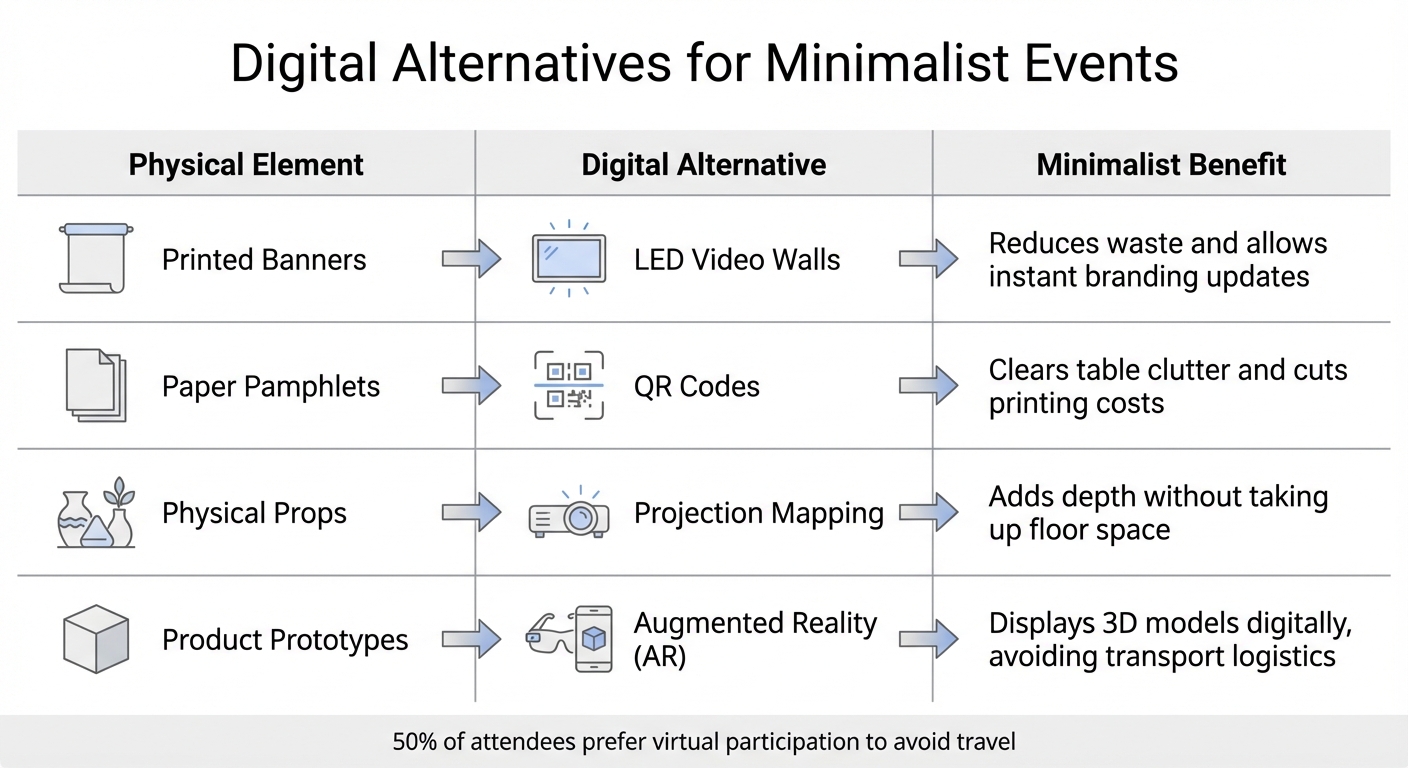
Digital vs Physical Event Elements: Minimalist Alternatives
Planning minimalist corporate events requires intentional decisions that merge style with practicality. The key is creating a cohesive theme – whether it’s Scandinavian, Japandi, or Industrial – that ensures every design element feels unified. An open floor plan is essential for fostering a sense of spaciousness, preventing the venue from feeling crowded.
Selecting Statement Pieces
Instead of overwhelming the space with numerous decorations, focus on one or two standout design elements. For example, a sculptural stage backdrop or a single striking centerpiece can define the aesthetic without adding clutter. Tablescapes should follow the same principle – use tapered candles or a single dramatic bloom, like a protea, instead of elaborate floral arrangements. Even food presentation plays a role: hors d’oeuvres arranged in neat, precise grids create a clean, organized appearance.
These bold, intentional choices establish a visual anchor while keeping the overall design simple and functional.
Meeting Practical Needs Without Clutter
Combining functionality with minimalism requires careful planning and multipurpose elements. For instance, round tables are more space-efficient, seating 8–10 adults at a 5-foot table compared to 8 at an 8-foot rectangular one. Transparent furniture, such as Lucite or glass chairs, keeps sightlines open, enhancing the feeling of spaciousness. Forgo table skirts to showcase the clean lines of the furniture, maintaining a modern aesthetic. To create breakout or networking areas, consider temporary solutions like folding screens, drapes, or decorative dividers, which define spaces without permanently altering the open layout. Spacing furniture away from walls further contributes to the airy, open vibe.
Using Technology to Reduce Physical Elements
Digital tools are invaluable for reducing physical clutter while maintaining a polished, professional look. LED video walls and digital banners replace traditional printed posters and stage sets, offering instant branding updates with zero waste. QR codes simplify table settings by providing digital access to agendas, pamphlets, or party favors, eliminating the need for printed materials. Projection mapping transforms venue walls into dynamic, immersive displays, removing the need for bulky decor or props. For hybrid events, virtual platforms eliminate the need for large physical venues, with 50% of attendees preferring virtual participation to avoid travel. Augmented reality (AR) can digitally showcase 3D product models, eliminating the need for physical prototypes and the logistics of transporting them.
| Physical Element | Digital Alternative | Minimalist Benefit |
|---|---|---|
| Printed Banners | LED Video Walls | Reduces waste and allows instant branding |
| Paper Pamphlets | QR Codes | Clears table clutter and cuts printing costs |
| Physical Props | Projection Mapping | Adds depth without taking up floor space |
| Product Prototypes | Augmented Reality (AR) | Displays 3D models digitally, avoiding transport logistics |
Incorporating these digital strategies aligns perfectly with minimalist principles, reducing physical elements while enhancing the overall experience.
Minimalist Design and Environmental Responsibility
Minimalist event design goes beyond looking good – it’s a practical way to address environmental concerns. By focusing on simplicity, this approach reduces waste at every stage, from production to disposal. For example, a single traditional conference can produce tons of landfill waste. Minimalist planning helps tackle this issue right from the start, aligning design with eco-conscious values.
What’s more, the environmental benefits often come with financial perks. For instance, reusable materials can pay for themselves after just a few events. With 61% of event organizers aiming to make their events more environmentally friendly, minimalist design offers a straightforward solution.
Working with Reclaimed and Local Materials
To make events even more sustainable, consider practical strategies like using reclaimed or locally sourced materials. Transportation accounts for a significant portion of the events industry’s greenhouse gas emissions, which make up 10% of the global total. Choosing local vendors for things like seasonal produce, flowers, and decor reduces these "event miles" while also supporting nearby businesses.
A standout example of this approach was Universal Music Group’s Grammy after-party in February 2023, held at Milk Studios in Los Angeles. Executive Producer Susan Mazo and Creative Director Krislyn Komarov of Organized Matter led the event’s design. They featured a 10-foot-tall steel tree made from discarded steel mesh that doubled as a candelabra. Even the award statue for Billie Eilish was crafted from reclaimed concrete coated with slaked lime and crushed marble. After the event, Organized Matter launched "FLORAL RIG", a prop rental service that ensures custom sculptures like these are reused by others in the creative industry.
"In our design process, we prioritize creating items that serve a purpose beyond the event itself. Not only does this reduce waste and promote sustainability, but it also allows us to contribute to the industry and our community in a meaningful way."
– Krislyn Komarov, Creative Director, Organized Matter
Simple changes can also make a big difference. Swap cut flowers for potted plants or succulents that guests can take home or replant. Locally reclaimed branches or seasonal flowers from wildfire clearings add natural beauty without the waste of imported blooms. Materials like bare wood, stone, bamboo, and linen bring texture and elegance without over-the-top decoration.
These thoughtful material choices set the stage for even broader waste-reduction efforts.
Cutting Waste Through Intentional Design
Minimalist design thrives on reducing waste by focusing on reusable or digital alternatives instead of disposable items. For example, LED lighting uses 90% less energy than traditional bulbs, and high-efficiency systems can cut water usage by over 50%.
Printed signage can be designed without event-specific details so it can be reused later. Better yet, digital screens or tablets are even more flexible and can simply be turned off when not needed. Avoid floral foam, a non-biodegradable material containing harmful chemicals like formaldehyde. Additionally, plated meals are a smart choice over buffets, as they help control portion sizes and significantly reduce food waste.
Catering plays a major role in sustainability too. For example, the feed conversion ratio for beef is about 7:1, meaning it takes seven pounds of feed to produce one pound of beef. Compare that to 2.5:1 for poultry. By focusing on local, seasonal, and plant-based menu options, you can cut down on "food miles" and the environmental toll of meat production. Eliminating single-use plastics like straws and bottles in favor of reusable glassware, linens, and compostable items is another impactful step.
"Every decision you make during an event has repercussions on the environment."
– Martha Keele, COO, Toast of the Town LLC
Minimalist design proves that less can be more. With 63% of event organizers prioritizing greener practices, this approach offers a way to create events that are both visually stunning and environmentally responsible.
Creating Minimalist Events at Aloft Trophy Club Westlake
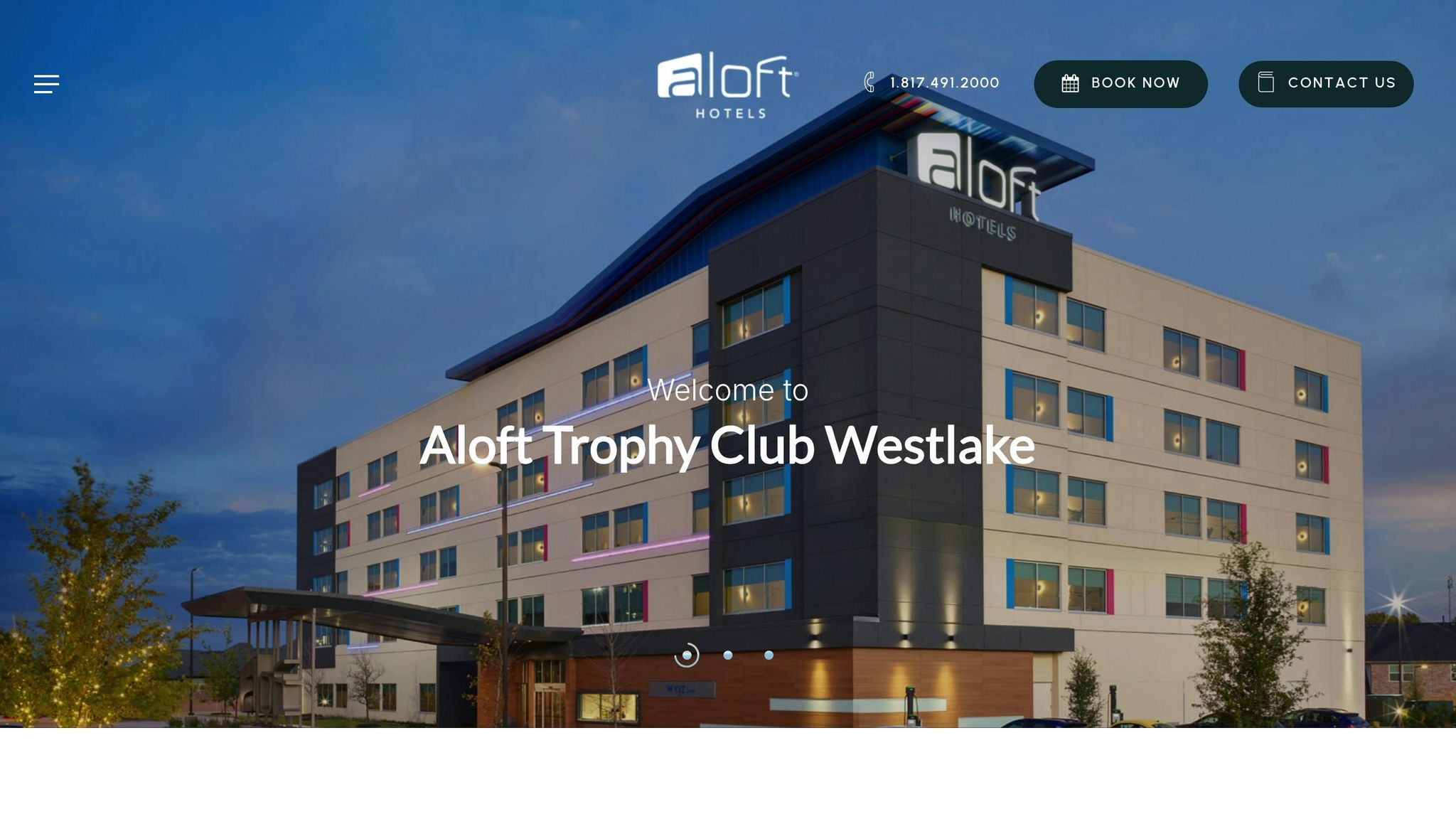

Why Aloft Trophy Club Westlake Works for Minimalist Events
Aloft Trophy Club Westlake offers a sleek, modern design with clean lines, neutral tones, and open layouts. Its guest rooms and meeting spaces emphasize simplicity, making it a perfect choice for corporate events focused on streamlined, clutter-free experiences.
The hotel’s location near major corporate headquarters in the Dallas–Fort Worth area simplifies travel logistics, cutting down on commute times and allowing event planners to focus on creating efficient programming. Situated in Trophy Club, the venue also provides access to local suppliers, making it easier to incorporate reclaimed or locally sourced materials – an ideal match for companies prioritizing environmental responsibility. This thoughtful design and strategic location make Aloft Trophy Club Westlake a standout option for modern, minimalist gatherings.
The meeting spaces are highly adaptable, offering flexibility to fit various event needs. For example, the Tactic Meeting Room spans 2,242 square feet and can be divided into two smaller spaces, ensuring the venue can be tailored to the exact size of your group. Floor-to-ceiling windows flood the rooms with natural light, reducing reliance on artificial lighting and enhancing the minimalist atmosphere. The smooth transition between indoor spaces and outdoor areas – such as the patio overlooking the pool – creates an open, airy feel, reinforcing the principles of minimalism throughout the event.
Using Aloft Trophy Club Westlake’s Features for Minimalist Design
The neutral color palette of the venue acts as a blank canvas, allowing planners to add a single statement piece, such as a sculptural centerpiece, to maintain focus and clarity.
Modular furniture enhances the venue’s flexibility, supporting a variety of layouts. For example, chairs can be arranged in a circle for intimate discussions or in rows for formal presentations. This adaptability ensures efficient use of space. Imagine a corporate workshop where chairs are arranged in a single circle, a digital agenda is projected using the built-in technology, and a simple coffee and tea station is provided – every element serves a purpose without adding unnecessary clutter.
The venue’s integrated technology, including free WiFi and advanced A/V systems, minimizes the need for printed materials and signage. Digital displays can showcase schedules and directions, while the W XYZ Lounge serves as a chic, streamlined reception space. Additionally, the option to bring in outside catering allows for minimalist menu choices, such as plated meals instead of buffet spreads. These features align perfectly with minimalist design principles, emphasizing functionality and focus while keeping the event visually clean and organized.
Conclusion
Minimalist design simplifies corporate events by focusing on what truly matters. By cutting out unnecessary clutter, it draws attention to key elements like branding, speakers, and product displays. This approach creates a calm environment that encourages networking and learning, while also ensuring every detail serves a clear purpose. It’s not about having less – it’s about making every choice intentional. This clarity not only enhances the event’s visual appeal but also makes planning and logistics more straightforward.
"Minimalist event design isn’t about doing less – it’s about doing only what matters, with intention and style." – Lexi Rider, Senior Creative Strategy & Event Design Manager, Hosts Global
Choosing minimalist decor simplifies decision-making for planners, reduces setup and cleanup time, and can even be more budget-friendly. It also improves how guests move through the space and communicate. Soft color palettes, particularly blues and greens, can create a calming atmosphere that helps guests stay focused.
Minimalism also aligns with sustainability goals. By opting for fewer, higher-quality materials, events can reduce waste and resource use while maintaining an elegant and sophisticated look.
FAQs
How do I keep a minimalist event from feeling empty?
To prevent a minimalist event from feeling sparse, aim for a sense of balance and purpose. Focus on standout features, like a bold centerpiece or a sophisticated backdrop, to anchor the design. Incorporate carefully chosen colors, textures, and lighting to bring warmth and dimension without overcrowding the space. Opt for fewer, high-quality decor pieces that align with your theme, ensuring the environment feels intentional, welcoming, and polished.
What’s the easiest way to cut clutter using technology?
Going paperless is one of the simplest ways to eliminate clutter in event planning. Instead of printed tickets, programs, or flyers, consider using mobile apps, QR codes, or digital displays. Not only does this cut down on waste, but it also boosts efficiency while giving your event a sleek, modern vibe. Tools like digital signage and online registration platforms can further simplify the process, offering a more streamlined and environmentally conscious experience for attendees.
What are the biggest sustainability wins in minimalist events?
Minimalist events offer several environmental benefits by focusing on simplicity and sustainability. By cutting down on waste, minimizing carbon emissions, and opting for eco-conscious materials, these events make a positive impact. Key strategies include ditching single-use plastics, encouraging recycling, and selecting energy-efficient venues to reduce their footprint.
Going digital is another effective approach – using paperless registration and communication tools significantly cuts down on waste. On the catering side, choosing local and organic food options not only aligns with eco-friendly goals but also complements the sleek, minimalist vibe of the event.