

Gamified corporate events are transforming how companies engage attendees by integrating game-like elements such as points, leaderboards, and rewards. These strategies boost participation, knowledge retention, and networking while making events more interactive and memorable. Here's what you need to know:
Key Highlights:
- What is Gamification? Adding game mechanics (e.g., challenges, badges, leaderboards) to events to increase engagement and motivation.
- Benefits: 87% of event organizers report higher engagement, with participation rates jumping 42% and knowledge retention improving by 34%.
- Trends: AR/VR experiences, real-time analytics, personalized challenges, and hybrid event tools are reshaping gamification.
- Success Elements: Use points systems, digital badges, and team-based activities. Balance competition with collaboration to cater to diverse personalities.
- Venue Needs: High-speed WiFi, flexible spaces, and advanced tech are essential for smooth gamified experiences.
Actionable Insights:
- Align gamification mechanics (e.g., quizzes, scavenger hunts) with event goals like team building or networking.
- Use pre-event surveys to personalize challenges based on attendee preferences.
- Track metrics like participation rates and knowledge retention to measure ROI.
- Choose tech-ready venues like Aloft Trophy Club Westlake, offering strong connectivity and modular spaces.
Gamification drives engagement, learning, and connection. When paired with the right tools and venues, it turns routine events into impactful experiences.
Gamify Your Event: Tested Strategies That Actually Work [Event Insider 35]
Key Elements of Successful Gamified Events
To make gamified events truly effective, you need to carefully design strategies that not only engage participants but also align with your business goals.
Gamification Mechanics to Include
The right mechanics can transform your event into an unforgettable experience. Start with a points system to reward attendees for engaging in activities like attending sessions, participating in discussions, or visiting sponsor booths. Pair this with real-time leaderboards to spark a competitive spirit, encouraging attendees to stay active throughout the event. Adding digital badges for achievements can further motivate participants and create opportunities for networking.
Interactive challenges and team-based tasks - such as scavenger hunts or collaborative puzzles - are excellent tools for keeping attendees engaged while reinforcing key content. Quizzes and knowledge checks are also effective for maintaining focus during longer sessions, all while supporting your educational objectives.
In October 2022, Salesforce introduced a gamified scavenger hunt at Dreamforce. Using QR codes and mobile apps, attendees were guided through sponsor booths, leading to a 38% boost in booth traffic and a 22% increase in sponsor lead generation compared to previous years. Features like real-time leaderboards and instant rewards kept the energy high throughout the multi-day event.
Research indicates that gamification can boost employee engagement by up to 60%, often doubling or tripling participation rates when compared to traditional formats. The secret lies in choosing mechanics that resonate with your audience and align with your event goals.
Balancing Competition and Collaboration
One of the trickiest parts of gamified events is finding the right balance between competition and collaboration. Successful events cater to both competitive and collaborative personalities by incorporating mixed-format challenges that reward both individual and group effort.
For example, you might design hybrid activities where individual tasks - like solving puzzles - contribute to a larger team goal. This approach ensures that introverted participants who prefer teamwork can shine alongside more competitive individuals.
Non-competitive elements can also play a big role. Activities like gratitude walls, idea-sharing sessions, or recognition ceremonies allow everyone to feel valued, regardless of their standing on the leaderboard.
Deloitte’s annual employee summit in March 2023 featured team-based puzzle challenges tied to business strategy sessions. Teams earned points for collaboration and problem-solving, which led to a 15% increase in knowledge retention and a 20% rise in employee satisfaction scores. The event succeeded by balancing individual recognition with team achievements.
Keep an eye on participation levels throughout the event. If engagement dips, consider shifting from individual scoring to team-based systems to reignite enthusiasm.
Designing Goal-Oriented Gamified Events
Every gamification element should serve a specific purpose tied to your business goals. Whether your aim is team building, knowledge sharing, networking, or brand awareness, your mechanics need to directly support these objectives.
For team-building events, focus on collaborative challenges and group missions. If knowledge retention is a priority, incorporate quizzes and scenario-based tasks. Networking-focused events can include challenges that encourage attendees to connect with new people or explore different departments.
Customization is key. Pre-event surveys can help you understand what your audience values, allowing you to tailor challenges to their preferences. Be sure to factor in your company culture, industry, and participant demographics when designing activities.
Here’s how you can align mechanics with specific goals:
| Event Objective | Recommended Mechanics | Example Implementation |
|---|---|---|
| Team Building | Collaborative challenges, group puzzles | Cross-department problem-solving quests |
| Knowledge Retention | Interactive quizzes, scenario activities | Post-session knowledge checks with rewards |
| Networking | Connection challenges, social tasks | "Meet 5 new people" missions with verification |
| Brand Awareness | Scavenger hunts, sponsor interactions | QR code hunts through partner booths |
Tracking metrics throughout the event is essential to measure success. Monitor participation rates, engagement levels, and real-time feedback to see what’s working.
A European tech conference introduced a "Connection Quest" system, which led to a 340% increase in attendee interactions and a 23% improvement in overall event satisfaction scores.
To make gamification even more effective, stay flexible. Use analytics dashboards to track engagement in real-time and make adjustments as needed. Post-event surveys can provide valuable feedback for refining future events.
Strategies for Engagement and Motivation
Once you've designed goal-oriented events, the next step is to implement strategies that truly engage and motivate attendees. In gamified corporate events, success hinges on aligning activities with what participants care about and enjoy.
Personalizing Attendee Experiences
Making the experience feel personal is a game-changer. When attendees believe the event is tailored to them, they’re far more likely to participate. A great way to achieve this is by offering dynamic achievement paths that cater to different roles and skill levels.
Take a sales training event, for example. You could set up three tracks: one for beginners that focuses on product knowledge, another for intermediates that tackles customer objections, and a third for advanced participants that dives into complex deal negotiations. Each track could offer increasingly exciting rewards and recognition as participants progress.
Adaptive challenges take personalization a step further by adjusting in real-time. If someone breezes through questions, the system can serve up harder tasks. On the other hand, if someone struggles, they might get additional hints or simpler tasks to build confidence.
Pre-event surveys are a goldmine for this kind of customization. By asking attendees about their job roles, experience levels, and even learning preferences, you can craft a strategy that feels tailor-made. Registration data can also help segment participants, ensuring, for instance, that marketing professionals and IT specialists face challenges relevant to their expertise.
When challenges are designed with specific roles in mind, participants feel valued and recognized for their unique contributions. Once the groundwork is laid, interactive activities can take engagement to the next level.
Boosting Participation Through Interactive Activities
Personalization sets the stage, but interactive activities bring the event to life. Tools like live polls are perfect for turning passive audiences into active ones. Imagine a presenter embedding real-time voting into their session, letting attendees steer the conversation. Seeing instant results on-screen not only captivates the audience but also sparks meaningful discussions.
Event passports - whether digital or physical - are another excellent way to keep attendees engaged. These passports guide participants through various activities, such as visiting sponsor booths, attending sessions, or completing networking challenges. Each completed task earns stamps or points, creating a sense of progress and accomplishment.
Networking games are a clever way to tackle one of the trickiest aspects of corporate events: helping people connect. Gamified speed networking sessions, where participants earn points for exchanging contact details or finding common interests, make these interactions feel more natural and less awkward.
In January 2024, SocialPoint introduced a gamified scavenger hunt at a corporate conference. The result? A 35% jump in attendee engagement and a 20% increase in sponsor booth visits. Attendees scanned QR codes to complete challenges and earn points, with leaderboards displayed throughout the venue. Instant-win prizes and a virtual prize wheel kept the excitement going all day.
Audience choice awards are another interactive option, allowing attendees to vote on session topics, speakers, or even catering. Giving people a say in event decisions creates a sense of ownership and anticipation for the outcomes.
The best interactive activities share a few key traits: they’re simple to understand, easy to join, and offer quick rewards. Overly complicated setups or activities that require lengthy instructions often fail to keep momentum.
Using Leaderboards and Instant Feedback
Interactive activities are great, but keeping the energy up across an event requires structured feedback systems. Instant feedback is a powerful motivator. For example, mobile app notifications that announce badge achievements, points earned, or challenges completed create a cycle of positive reinforcement that keeps participants engaged.
Progress tracking is another essential element. Visual tools showing completion percentages, upcoming milestones, or available challenges help attendees see where they stand and what to do next. This kind of clarity makes it easier for participants to plan their time and stay motivated.
In March 2023, Bizzabo hosted a multi-day conference where attendees earned digital badges for completing challenges and attending sessions. The results were impressive: a 40% increase in session attendance and a 25% boost in networking interactions compared to previous years. Attendees could track their progress and receive instant notifications celebrating their achievements, which kept motivation high throughout the event.
Timing is everything when it comes to feedback. Recognizing someone immediately after they complete an activity reinforces positive behavior. Delayed feedback, on the other hand, tends to lose its impact. Modern gamification platforms make it easy to deliver notifications within seconds of task completion.
Balanced recognition systems ensure that everyone feels appreciated, whether they’re competitive or collaborative. While top performers might earn leaderboard spots, participation badges and completion certificates celebrate effort over results. Random prize draws can also reward attendees regardless of their ranking, keeping the experience inclusive.
Data collected from these systems is invaluable for making real-time adjustments. If participation in a particular activity dips, organizers can tweak point values, introduce bonus opportunities, or even launch new challenges to reignite interest. This flexibility transforms events from static programs into dynamic, engaging experiences.
sbb-itb-1e56dfa
Venue Considerations for Gamified Corporate Events
Selecting the right venue is a critical step in planning a gamified corporate event. Even with the most engaging activities and strategies in place, a venue lacking the necessary technical support can derail the entire experience. A successful venue should enable smooth digital interactions, ensuring that attendees can fully immerse themselves in the event without technical hiccups. Below, we’ll explore the essential tech features for gamified events and how Aloft Trophy Club Westlake stands out as an ideal choice.
Tech-Enabled Venues for Gamified Events
At the heart of any gamified event is its tech infrastructure. Seamless digital interactions, real-time feedback systems, and uninterrupted connectivity are non-negotiable.
First and foremost, high-speed, reliable WiFi is a must. This ensures that live polls, leaderboards, and event apps function without a hitch. The WiFi should be capable of supporting hundreds of simultaneous users and must be available throughout all areas of the venue - not just the main event spaces. Complimentary access is a bonus that attendees will appreciate.
Equally important is advanced audio-visual technology. Venues should offer multiple display options for showcasing leaderboards, live poll results, and other interactive content. A sound system that accommodates both presentations and real-time announcements is crucial for keeping attendees informed and engaged.
Flexibility in space configurations is another key feature. Venues with movable furniture, modular room dividers, and open layouts allow for a variety of setups, from team collaboration zones to individual challenge areas. Activities like scavenger hunts or station-based challenges benefit from venues that provide easy movement between spaces.
For cutting-edge experiences, consider venues that support additional hardware like AR headsets, interactive kiosks, or even holographic displays. These advanced technologies require not just physical space but also knowledgeable technical staff who can address issues quickly if they arise.
"Over 70% of event organizers report increased attendee satisfaction and engagement when using gamification at in-person events".
Lastly, don’t overlook power infrastructure. Attendees will likely be using their devices throughout the event, and gamification platforms often require extra equipment. A venue with plenty of power outlets and strategically placed charging stations can make all the difference.
Why Choose Aloft Trophy Club Westlake
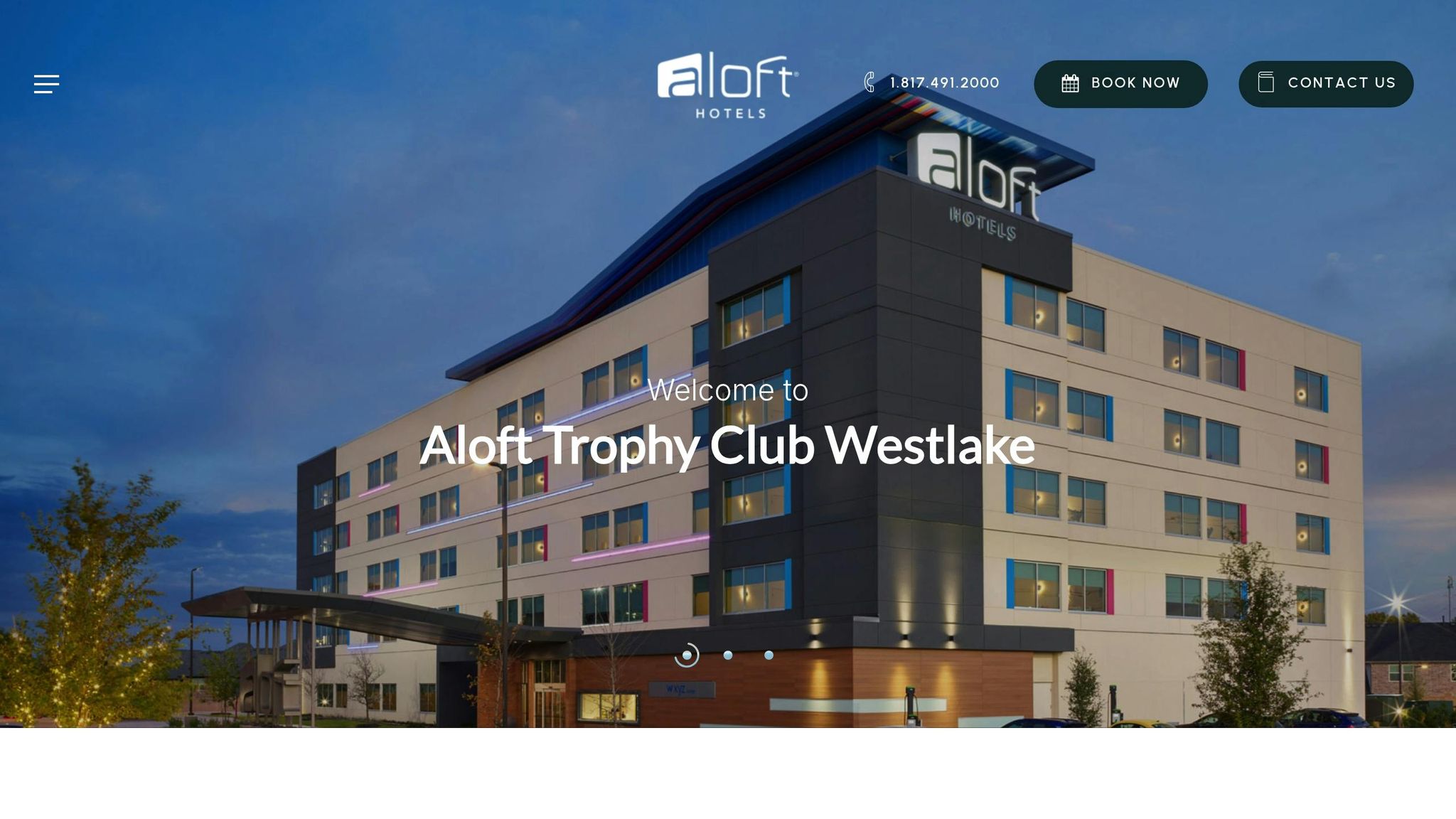
When it comes to meeting these tech needs, Aloft Trophy Club Westlake delivers on all fronts. This venue is a prime example of how a space can cater to the demands of gamified corporate events, with its focus on "robust technology, open spaces & contemporary amenities."
Comprehensive Connectivity
Aloft Trophy Club Westlake offers complimentary high-speed Internet across the entire property, including guest rooms, the lobby, the W XYZ Lounge, and all event spaces. This ensures attendees stay connected whether they’re participating in the main event or networking during breaks. Real-time updates and seamless access to gamification platforms are guaranteed.
Flexible Event Spaces
The venue boasts versatile spaces like the Tactic Meeting Room and other adaptable areas that can accommodate everything from small breakout sessions to large group challenges. Combining spaces such as the Event Space, W XYZ Lounge, and the outdoor Backyard area allows for unique gamified experiences that extend beyond traditional meeting rooms.
Creative Networking Opportunities
The W XYZ Lounge and outdoor pool area provide additional settings for networking games, informal challenges, or team-building activities. These spaces can also serve as reward zones, where top performers can enjoy exclusive perks during breaks.
Convenient Location
Situated near major corporate hubs like Charles Schwab, Deloitte, Sabre, and Fidelity, Aloft Trophy Club Westlake offers unmatched convenience for business travelers. Its proximity to these headquarters reduces travel time and makes it easier for participants to attend, which can significantly boost engagement and attendance rates.
Attendee-Centric Amenities
From digital check-ins via the Marriott Bonvoy App to complimentary on-site parking and electric vehicle charging stations, the venue ensures a smooth arrival experience. These thoughtful amenities allow attendees to focus entirely on the event. The on-site restaurant and convenience store keep participants fueled, while the fitness center and pool open up possibilities for wellness-oriented challenges or team competitions.
| Venue Feature | Standard Venue | Tech-Enabled Venue (Aloft Trophy Club Westlake) |
|---|---|---|
| WiFi Speed | Basic | High-speed, event-grade throughout property |
| AV Technology | Limited | Advanced, integrated systems |
| Space Flexibility | Fixed layouts | Modular, reconfigurable with indoor/outdoor options |
| Digital Integration | Minimal | App integration, real-time feedback capability |
| On-site Amenities | Basic | Restaurant, lounge, pool, fitness, business services |
When evaluating venues, it’s essential to conduct site visits. Test the WiFi speed and AV systems to ensure they meet your requirements. Collaborate with venue coordinators to understand their technical support capabilities and discuss your specific gamification needs. The best venues will have experience hosting interactive events and can offer tips on optimizing your space for maximum engagement.
"Venues with integrated tech support and flexible layouts see a 15-25% increase in repeat bookings for corporate events focused on engagement and interactivity".
Your choice of venue plays a direct role in how effectively you can collect engagement data and measure your event’s success. A tech-forward venue like Aloft Trophy Club Westlake not only meets these needs but also enhances the overall attendee experience, ensuring your gamified corporate event is memorable and impactful.
Measuring Success and ROI of Gamified Events
To make gamified corporate events truly impactful, you need to track and analyze engagement effectively. By understanding what worked, what didn’t, and where improvements can be made, you can fine-tune future events for even better results. This requires a structured approach to collecting and evaluating data.
Key Metrics to Track
One of the first things to measure is participation rates - the percentage of attendees actively engaging in gamified activities. This tells you how appealing your challenges are and whether they resonate with your audience. High participation rates usually point to activities that align well with attendees' interests and skills.
Another critical metric is knowledge retention, which can be assessed through pre- and post-event quizzes. The difference in scores shows how effectively the event conveyed its educational objectives.
For events aimed at improving teamwork, team collaboration scores are especially useful. These scores reflect how often teams communicate, their problem-solving strategies, and their ability to work together under pressure. This is particularly valuable for events focused on fostering cross-departmental relationships or enhancing communication.
Post-event feedback provides qualitative insights that numbers alone can’t capture. By collecting satisfaction ratings, perceived value assessments, and specific suggestions, you can pinpoint which gamified elements were most successful and which need improvement.
For example, a Fortune 500 company using SocialPoint’s gamification platform reported impressive results in 2022: session attendance increased by 45%, knowledge retention improved by 35%, and sponsor booth visits climbed by 25%. By leveraging SocialPoint’s analytics dashboard, the event team tracked engagement in real time and adjusted activities as needed, resulting in a 30% ROI boost for the event.
Other metrics worth tracking include time spent on activities, challenge completion rates, and progress toward event objectives. With the right tools, this data can be transformed into actionable insights.
| Metric | Impact Increase |
|---|---|
| Attendee Engagement | +60% |
| Knowledge Retention | +40% |
| Participation Rates | +30-50% |
| Post-Event Productivity | +20% |
| Sponsor Booth Visits | +25% |
Tools for Data Collection and Analysis
To capture these metrics effectively, use platforms that combine data collection with real-time reporting. Event management platforms with built-in gamification analytics can log user actions, track progress, and provide customizable dashboards for monitoring multiple metrics simultaneously.
For training-focused events, learning management systems (LMS) are a great fit. They measure knowledge acquisition through quizzes, scenario-based challenges, and skill assessments, offering detailed analytics to identify where participants excel or struggle.
Digital surveys are another essential tool. Sending surveys immediately after the event often yields higher response rates, while live polls during the event can provide real-time insights into attendee sentiment, allowing you to adjust activities on the fly.
More advanced options include AI-driven analytics, which can uncover patterns in attendee behavior that might not be immediately obvious. These tools can predict disengagement and recommend timely interventions to keep participants engaged. API integrations can also link event data with internal business systems, helping you correlate participation with workplace performance or productivity.
For a simpler approach, QR code tracking systems can monitor attendee movement and engagement. By scanning codes at various stations, participants create a digital trail that reveals traffic patterns, popular activities, and areas that may need improvement. This data is invaluable for optimizing future events, from venue layouts to activity placement.
Finally, real-time dashboards give organizers instant visibility into engagement levels. If participation in certain activities drops, you can quickly pivot and implement alternative strategies to keep the energy high.
Evaluating and Improving Future Events
Analyzing your data will help you identify which activities drove the most engagement, which teams or individuals excelled, and where participation dropped off. For example, if networking was a key goal, look at which activities encouraged the most cross-team interactions. For educational events, focus on mechanics that improved knowledge retention.
Consistency is key for long-term improvement. By tracking the same metrics across multiple events, you can spot trends and measure the impact of any changes you make.
Don’t stop at immediate feedback - survey participants weeks or even months after the event. This delayed feedback can reveal whether the gamified experience led to lasting benefits, such as improved productivity, better collaboration, or enhanced skills.
The Atlantic’s hybrid event combined interactive games with live Q&A sessions, using digital tools to track participation and collect feedback. Post-event analysis showed a notable increase in engagement and attendee satisfaction, which informed strategies for future events.
Conclusion: Make Your Corporate Events Stand Out with Gamification
Gamification has the power to increase attendee engagement by up to 60% compared to traditional event formats. By turning passive observers into active participants through interactive challenges and real-time feedback, you can create events that not only captivate but also deliver measurable outcomes.
The secret to success lies in thoughtful execution. Every gamified component should align with your event’s objectives - whether it’s enhancing knowledge retention, encouraging networking, or building stronger team connections. Tailoring activities to fit your organization’s goals and culture ensures the experience feels relevant and impactful.
Technology and venue choice play a pivotal role in bringing your gamified event to life. Spaces like Aloft Trophy Club Westlake provide the high-speed WiFi and adaptable environments needed for seamless digital integration and immersive activities.
Measuring the success of your efforts becomes easier with the right tools. By leveraging analytics platforms to track participation, engagement, and learning outcomes, you can fine-tune your strategies and demonstrate clear ROI. A data-driven approach ensures continuous improvement while showcasing the value of gamification.
When done right, gamification transforms events into purpose-driven experiences. Whether you're planning a training session, product launch, or team-building retreat, combining well-designed game mechanics with a tech-ready venue like Aloft Trophy Club Westlake can elevate your event from ordinary to unforgettable.
The future of corporate events is all about interaction and results. By adopting gamification strategies and choosing venues that support your tech needs, you’re creating experiences that leave a lasting impression on your attendees and drive meaningful outcomes for your organization.
FAQs
How can businesses tailor gamification strategies to meet their event goals and engage their audience effectively?
To make gamification work for your event, start by getting crystal clear on its purpose. Is the goal to build stronger teams, provide training, or simply boost engagement? Once you've nailed that down, shift your focus to the audience. Think about what makes them tick - their interests, skill levels, and what motivates them. This insight will help you design challenges and rewards that truly connect with them.
Adding a personal touch is key. Customize the gamified elements to reflect your company’s branding and values, ensuring everything ties back to the event's main objective. For example, you could include interactive leaderboards to spark friendly competition, themed challenges to keep things interesting, or team-based games to encourage collaboration. And if you're looking for a venue that sets the stage for both fun and productivity, consider a space like Aloft Trophy Club Westlake. Its modern event areas and amenities can elevate the entire experience.
How can you balance competition and teamwork in gamified corporate events?
To create the perfect mix of competition and collaboration in gamified corporate events, it’s essential to include activities that celebrate both team effort and individual accomplishments. Consider adding team-based challenges where participants collaborate to solve problems or hit shared goals, while also incorporating elements like leaderboards or awards to highlight individual contributions.
Another great strategy is to design tasks that promote interdepartmental cooperation or cross-functional teamwork. For instance, you could set up scenarios where teams need to exchange resources or share insights to move forward. This not only keeps the event interactive and exciting but also strengthens workplace connections and encourages a balance of teamwork with friendly competition.
What are the key metrics to track the success and ROI of gamified corporate events?
To determine how well gamified corporate events perform and assess their return on investment (ROI), it's essential to keep an eye on a few key metrics:
- Engagement Levels: Look at how actively participants are involved. This includes tracking participation rates, the time they spend on activities, and how much they interact during the event. These numbers give a clear picture of overall engagement.
- Feedback Scores: Use surveys or rating tools to gather attendee opinions. Their feedback will help you understand how they felt about the event and whether it met their expectations.
- Goal Achievement: Check if the event hit its targets. Whether it's boosting team collaboration, generating leads, or helping attendees retain knowledge, this metric reveals if the event served its purpose.
- Return on Investment (ROI): Compare the event's expenses to measurable outcomes. This could mean new leads for the business, a noticeable boost in employee productivity, or better brand recognition.
Focusing on these areas helps pinpoint successes and highlights where there’s room for improvement in planning future events.